

Link to story received from media relations for Texas A&M AgriLife – Email: news@ag.tamu.edu
Author of the article below is Kay Ledbetter
Story comes from AgriLife Today – Texas A&M AgriLife’s Digital Magazine and Newsroom
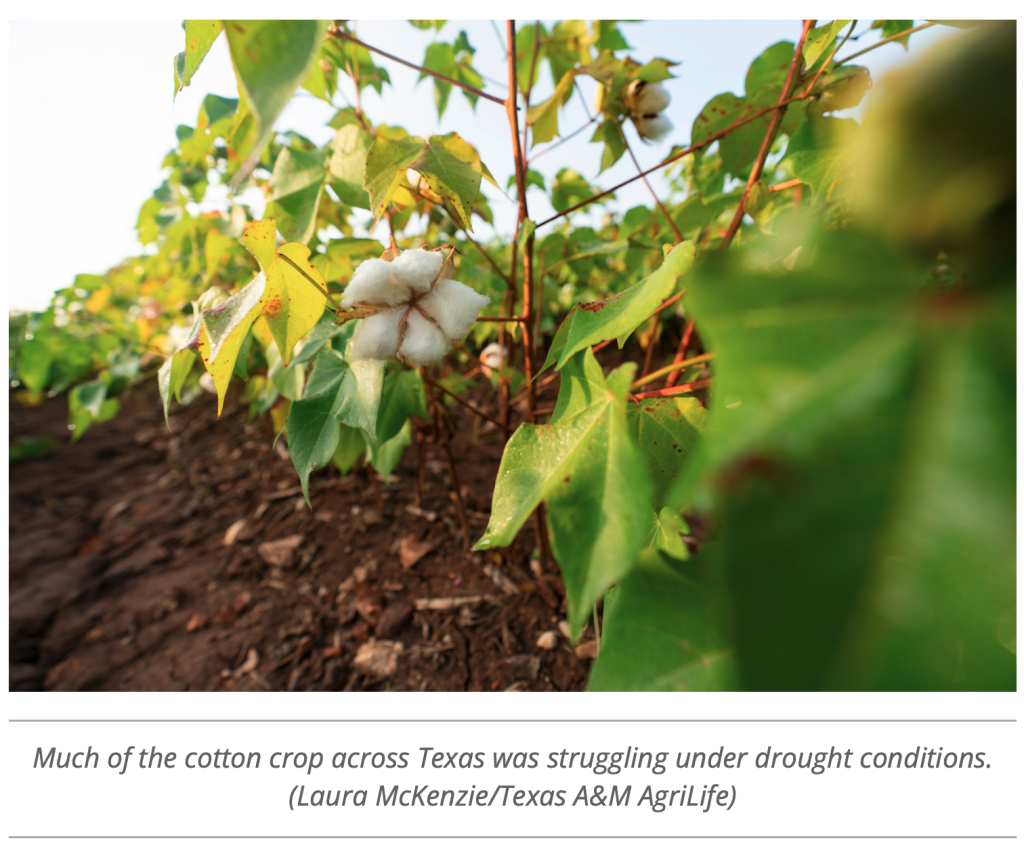
Extreme or exceptional drought in some regions and excess moisture under cloudy conditions in other areas are causing different stressors for Texas crops as the summer season nears completion, according to Texas A&M AgriLife Extension Service experts within the TexasA&M Department of Soil and Crop Sciences.
According to the Texas Drought Monitor map, 93% of the state has fallen into at least early drought stages, with more than 35% experiencing severe drought or worse. This is an increase of 8% from last week and 25% more than this time last year.
Increased stress due to drought leads to many other concerns: less water for irrigation, reduced yields, greater insect infestation and crop disease, a need for increased irrigation amid dropping water tables, reduced pasture and forage, early supplemental feeding of livestock, decreased stock weights, and less water in ponds, creeks and playa lakes.
One of the Bright Spots
The Coastal Bend is wrapping up cotton harvest with few problems. Good spring rains provided enough subsoil moisture to last row crops like corn, sorghum and cotton through most of July without significant moisture stress, said Josh McGinty, Ph.D., AgriLife Extension agronomist and assistant professor, Texas A&M AgriLife Research and Extension Center at Corpus Christi.
However, extreme heat and dry conditions are causing concerns about soil moisture profiles for future plantings.
“Hot, dry weather in August is generally a good thing for us while getting cotton out of the field,” McGinty said. “We need some good rains soon, though, to start replenishing the profile for next spring.”
High Plains and Rolling Plains Crops Suffer
The High Plains has remained locked in severe drought conditions over the past several weeks, said Kevin Heflin, Ph.D., AgriLife Extension agronomist and assistant professor, Texas A&M AgriLife High Plains Research and Extension Center in Canyon.
Conditions declined due to minimal rainfall and continued extreme heat and high winds throughout August and September, Heflin said.
“For sorghum and other summer crops, this has meant sharply reduced yields on irrigated fields and outright crop failure on dryland acres,” he said. “Daily water demand has been as high as half an inch per day during 100-plus degree stretches, leaving little hope that any rain can save drought-stressed summer forage crops for many producers.”
When moisture stress occurs late in the season, there can be incomplete pollination and reduced grain or biomass yield, Heflin said. This makes irrigation timing, or rain, particularly important for limited-water systems in the Panhandle.
Another concern for producers growing forage sorghums is prussic acid or cyanide accumulation, which spikes in young, stressed or frost-damaged sorghum tissue. Grazing or greenchop of drought-stressed forage sorghum should be delayed or tested before feeding to livestock.
Heflin said incidences of lodging, blasted heads, wind damage, delayed maturity and reduced yields are unfortunately typical for 2026 summer crops.
Emi Kimura, Ph.D., AgriLife Extension agronomist and professor, Texas A&M AgriLife Research and Extension Center at Vernon, echoed Heflin, saying high daytime temperatures combined with a lack of precipitation increased stress on cotton and peanuts in the Texas Rolling Plains.
Evapotranspiration reached 2.5 inches per week in July and August before slowing to 2 inches per week in September; however, soil moisture losses continue without significant rainfall.
According to the U.S. Department of Agriculture Farm Service Agency acreage report, as of Sept. 11, approximately 10% of the 3.7 million total reported dryland crop acres in Texas were declared failed.
Rice-Growing Regions Affected by Too Much Rain
Texas typically grows two rice crops per growing season. The main crop harvest is complete, with reports of yields and milling slightly below average due to increased rainfall and cloudy weather during pollination, said Sam Rustom, Ph.D., AgriLife Extension agronomist and assistant professor at Eagle Lake and the Texas A&M AgriLife Research and Extension Center at Beaumont.
While the second crop, called the ratoon crop, is progressing, some parts of the Texas rice belt are having trouble with regrowth due to rains and cloudy weather. Wet, cloudy conditions during the main crop’s reproductive stages most likely cause apical dominance, Rustom said.
Apical dominance is the biological process where ratoon tillers grow from the upper and/or middle nodes of rice plants rather than the basal nodes, he said. Regrowth from middle and upper nodes is usually weaker, with smaller panicles resulting in lower yield and grain quality.
“Additionally, rice delphacid remains the No. 1 pest management concern for Texas rice producers, especially during this time of year,” Rustom said. “While 2026 has been relatively mild, we have observed the insect in most, if not all the rice-growing counties across the Texas rice belt this year.”
There have been slight increases in rice delphacid activity in recent weeks, but a stronger beneficial/predatory insect complex this year is helping mitigate impact.
“Keep in mind that we are still learning about this pest, and populations can explode at any time, especially as the ratoon rice gets deeper into the reproductive stages like heading and grain fill,” Rustom said.
Tough Wheat Planting Conditions
Going into wheat planting season, Brandon Gerrish, Ph.D., AgriLife Extension statewide small grains specialist and assistant professor, Department of Soil and Crop Sciences, Bryan-College Station, said seed dealers are reporting only 60-70% of normal supplies this year.
He said the seed shortage was due to poor growing conditions in the 2026 crop. And now wheat planting conditions are still not good across the state. There have been isolated rains, but moisture dries up quickly with the high temperatures.
“Growers who are wanting to graze are the most eager to get seed into the ground right now,” Gerrish said. “Those planting for grain still have a few weeks before they will get going; hopefully temperatures will cool, and we’ll have some more rainfall between now and then.”
AgriLife Extension District Reporters Compiled the Following Summaries:
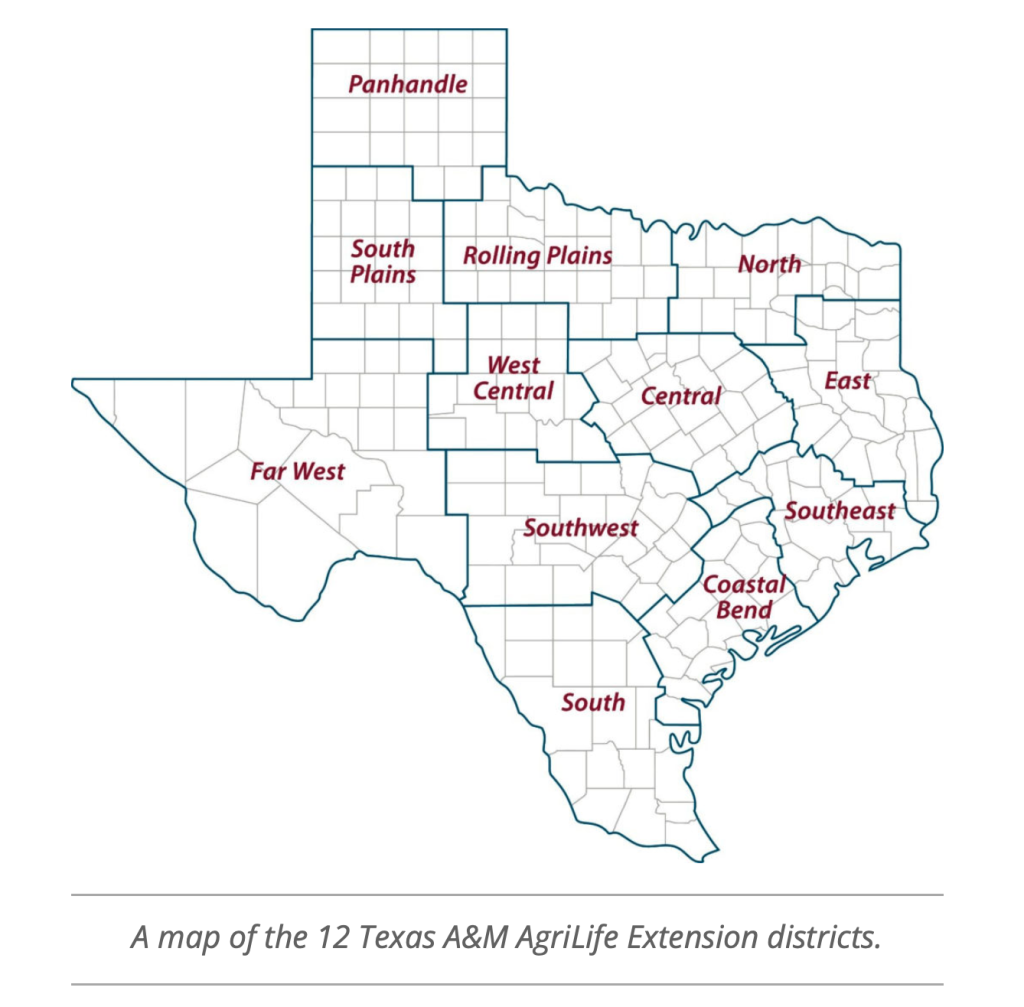
Panhandle
Conditions were cooler than previous weeks in some areas, which helped crops and reduced evaporative demand for water, while hot, dry weather with a few scattered showers continued elsewhere. Thunderstorms delivered additional moisture that benefited warm-season crops in their final stages of maturity. Topsoil and subsoil moisture levels were very short to adequate. Corn was in very poor to fair condition. Corn silage harvest continued across the district, and more corn was chopped each day because of low yield estimates. Grain corn harvest continued, and early corn harvest got underway in some areas. Sorghum and cotton were both in very poor to fair condition. Headed grain sorghum matured and began coloring across most fields. Winter wheat planting was underway. Any improvement in soil moisture was considered critical to cool-season small grain planting, germination, emergence and stand establishment. Pasture and rangeland conditions were very poor to good. Hay was in short supply, and livestock conditions were very poor to good.
South Plains
Extreme heat and drought continued through the week. Rainfall was scattered, with reports of 0.5-1.5 inches in some areas and trace amounts elsewhere. Topsoil and subsoil moisture levels were very short to adequate. Some hail damaged crops ahead of harvest. Corn was in very poor to fair condition, and corn and sorghum harvest continued alongside silage harvests. Harvest fields were swathed and baled for hay. Black-eyed pea harvest began with lower-than-expected yields. Cucumber harvest continued, but yields were not great. Cotton was in very poor to fair condition, with stunted growth and reduced boll development. Dryland bolls that opened were immature and small, and bolls in irrigated fields were starting to open. Early wheat planting started in some areas as producers hoped to catch rainfall and provide early grazing. Pasture and rangeland conditions were very poor to fair. Native grasses provided minimal grazing. Livestock conditions were very poor to good, and cattle producers supplemented feed earlier and more heavily than normal. Cattle body conditions slipped in drier areas.
Rolling Plains
Daytime temperatures averaged over 100 degrees, reaching 107 in some locations, and hot, windy conditions persisted. Scattered rains were very localized, measuring from trace amounts to 0.7 inch. Topsoil and subsoil moisture levels were very short to adequate. Stock tanks were getting low. Fire risk drew concern where standing forage remained ungrazed. Cotton was in very poor to poor condition and deteriorated daily. Corn harvest was complete, and sorghum conditions were very poor. A few producers started winter wheat planting, but most were waiting for rain. Pasture and rangeland conditions were very poor to fair, and grazing continued to decline with almost no green except for the mesquite. Livestock conditions were very poor to good. Hay and feed were provided, but livestock body conditions slipped and gain on calves slowed. Cattle were being shipped to market because producers were short of grass.
North
Another hot, dry week gripped the district, with a cooldown Thursday evening that brought no rainfall to most areas. Spotty light showers fell in a few places, and one area recorded 0.5 of an inch. Topsoil and subsoil moisture levels were very short to adequate, and drought conditions worsened. Stock tanks were very low, and burn bans were in place across much of the district. Corn was in good to excellent condition and harvest was nearly complete. Soybean conditions were fair to good, and harvest was well underway. Sorghum and cotton were both fair to good. Wheat ground was being prepared, but no planting was reported. Okra and field peas were the only vegetables still producing, along with some fall tomato plants under irrigation. Pasture and rangeland conditions were very poor to fair, and pastures went dormant. Livestock conditions were fair to good. Trees were dropping leaves early. Feral hogs were active.
East
Hot, dry conditions persisted across most of the district, and rainfall was extremely scattered. Some areas received 6 inches from Tropical Storm Eduardo while other areas measured barely 1 inch. Topsoil and subsoil moisture levels were very short to adequate. Ponds, lakes and rivers were low, and many small ponds were dry or nearly dry. Fire danger increased and burn bans remained in effect. Corn and cotton were both in good condition. Pasture and rangeland conditions were very poor to good. Recent rainfall improved pastures drastically in some areas, while pastures elsewhere were dry and brown. Hay production all but stopped. Most hay bales were already put up, and quality for the year was reported as poor to good. Producers held off planting winter pastures. Weed spraying slowed, and more pasture mowing was underway. Fall armyworm activity started after light showers, and infestations were reported sporadically. Livestock conditions were very poor to excellent, and fall calving started. Some producers began feeding hay, and others debated reducing stocking rates rather than feeding this early. Cattle markets were mixed — feeder calves ran $6-$10 higher per hundredweight and slaughter bulls were $5 higher at one sale barn while slaughter cows were down $2 per hundredweight, and bred cows brought $3,000 to $4,300 per head. Prices elsewhere continued to soften with the national trend. Feral hogs damaged fields, pastures and hay meadows.
Far West
Conditions varied sharply across the district. Hot, dry, windy weather and extreme heat dominated most areas, while the Big Bend region saw slightly cooler temperatures and scattered showers. Late afternoon showers in the Pecos area benefited crops and helped sustain pastures, and spotty thunderstorms fell elsewhere at the end of the week. Topsoil and subsoil moisture levels were very short to adequate but continued to decline. Water tanks were drying down. Lack of irrigation water remained an issue in the El Paso area. Cotton was in very poor to good condition, and hot, windy weather pushed the crop to maturity quicker than normal. Bolls opened with nearly all dryland fields ready for defoliation, but producers were waiting instead for a freeze to kill it due to the added expense. Grades on dryland cotton appeared very low, and a good portion of the crop may be taken out by insurance. Irrigation water was being cut off on cotton in some areas. Corn conditions were fair, and sorghum was in very poor to poor condition. Some wheat planting was expected to begin as cotton acres were removed, while other producers planned to wait for a good rain. Pasture and rangeland conditions were very poor to good, and pastures were nearly completely brown in some areas. Livestock conditions were poor to good, with body scores holding fair where forage remained. Producers continued to feed livestock and wildlife. Ranchers carried out fall cattle work with more attention to conditions-based management. Feral hog activity increased as drying water tanks pushed hogs to new water sources. Aoudad started forming breeding herds, and dove season was in full swing.
West Central
Extreme drought and heat held through another week, with 100-degree temperatures continuing and a few cooler days late in the week. A few scattered showers left less than 0.5 of an inch in parts of the district, but a return to 100 degrees dried up most of the moisture that fell. Topsoil moisture levels and subsoil conditions were very short to short. Cotton was in very poor to fair condition, with below-average yields expected. Corn conditions were very poor. Sorghum was in very poor to fair condition, and harvest was underway with grain sorghum producing below-average yields. Pecans were filling and in need of rain where irrigation was not available. Many farmers and ranchers plowed fields and were ready to plant winter wheat, though the ground was too dry to plant in parts of the district. Pasture and rangeland conditions were very poor to good, and pastures were brown with poor grazing. Hay production was very slow, and the dry grass that remained had lost nutritional value for grazing. Livestock conditions were poor to excellent. Supplemental feeding and mineral intake increased, and cattle were starting to be culled. The cattle market stayed active. Stocker steer prices rebounded $10-$20 higher per hundredweight, and stocker heifers were steady to $5 higher per hundredweight. Feeder steers were $5 to $7 lower and feeder heifers $6 to $7 lower per hundredweight. Packer cows and bulls were steady, and pairs and bred cows were in strong demand.
Central
Hot, dry conditions continued with another week of 100-degree temperatures. Scattered showers gave parts of the district a slight reprieve, with one area receiving up to 2.75 inches while others averaged 0.5 of an inch or nothing. Topsoil and subsoil moisture levels were very short to surplus. Stock tanks, stream flows and pond levels dropped considerably, and a few producers started hauling water. Fire conditions remained critical. Corn was in poor to good condition; harvest was closing out but some corn was still in the field because storage was at capacity. Sorghum conditions were fair to good, and harvest was also wrapping up. Cotton was in poor to good condition; harvest continued with yields reported above average, and some farmers were defoliating. Soybeans were in poor to fair condition. Fall small grain fieldwork went on in anticipation of rain, and wheat planting was expected to be delayed until rain arrived. Pasture and rangeland conditions were very poor to fair and declined as grasses slowed or stopped growing. Bermuda grass pastures responded well where moisture was received. Producers fed hay and other supplements to cattle, and livestock were monitored closely for heat stress. Hay harvest largely came to a halt, and hay stores were not expected to last with feeding beginning this early. Livestock conditions were very poor to excellent, and cattle remained in fair to good body condition. Cattle markets saw some downward pressure after a strong run. Sheep and goat markets held strong on steady demand and limited supply.
Southeast
Weather was more favorable in much of the district, with heavy afternoon showers, scattered thunderstorms and good rain in some areas. Topsoil and subsoil moisture ran from very short to surplus, and heavy showers kept the ground saturated in some areas. Localized flooding persisted in parts of the district through the weekend. Rice was in fair to good condition, and harvest was nearly complete, though yields were down where dry conditions remained. The ratoon crop was almost ready in some areas. Corn was in good to excellent condition, and harvest was finished aside from a few fields. Sorghum harvest was complete. Cotton was in good to excellent condition and continued to be defoliated. Pasture and rangeland conditions were poor to good. Livestock conditions were fair to excellent, and livestock looked good.
Southwest
Hot, dry conditions held through the week, with temperatures in the 100s every day and a flash drought setting in. A few very spotty showers dropped trace amounts to 0.3 of an inch, and conditions were cloudy several afternoons without producing rain. Topsoil and subsoil moisture levels were very short to adequate, and topsoil was getting extremely dry. High temperatures and wind continued to dry rangeland vegetation. Wildfire risk continued, and several wildfires sparked in the district. Corn was in fair to excellent condition and harvest was nearly complete. Sorghum harvest was finished. Cotton was in fair to good condition, and harvest was underway and winding up in some areas. Producers were getting ready to plant winter wheat and small grains for grazing, grain and cover crops. Pasture and rangeland conditions were very poor to good. Pasture mealybug damage showed across pastures and hay fields. Livestock conditions were fair to good. Producers started supplementing livestock diets. Stomach worm problems persisted in sheep and goats, and breeding season was underway. Local cattle prices rebounded after a slight drop. Acorns began to fall, and persimmons and mesquite beans ripened, which was expected to improve deer nutrition. Antler growth was about average, and a good many fawns were seen along with numerous turkey poults.
Coastal Bend
Hot, windy weather continued with no significant rain in most of the district, though some scattered, isolated showers fell. Topsoil and subsoil moisture levels were very short to adequate. Conditions were stable as a whole but were expected to keep deteriorating unless moisture was received. Cotton was in poor to excellent condition, and harvest was complete or almost complete with a small amount left. The late cotton yielded well except where young plants were flooded out. Gins ran around the clock and a lot of cotton was stacked along roadsides. Corn, sorghum and rice harvests were finished. Soybeans were in poor to fair condition, and harvest was underway. Winter pasture planting of wheat, oats and ryegrass was not expected to begin until soil moisture improved. Pasture and rangeland conditions were very poor to good and continued to decline, with pastures showing stress. Haying was not happening because of the dry weather. Livestock conditions were very poor to excellent, and livestock were holding up well.
South
Severe to extreme drought covered much of the district, with hot, dry and windy conditions and triple-digit temperatures nearly every day. Some scattered, isolated showers brought 1-3 inches to some areas and improved soil moisture and pasture conditions. Topsoil and subsoil moisture levels were very short to adequate. High winds increased evaporation rates in tanks and lakes, and some tanks began to run dry. Large dry fuel loads raised wildfire concern. Most field crops were harvested except for some late cotton, sesame and sunflowers. Cotton was in fair to good condition. Harvest continued with good yields reported, and defoliation started in some areas. Corn and sorghum conditions were fair to good, and corn harvest was complete with sorghum harvest nearly complete. Sesame harvest was nearly complete, and yields looked good. Peanuts were in fair to good condition and continued to mature under irrigation. Hay fields were cut and baled. Citrus and hay producers irrigated where water was available to continue the maturation of their fruit. Vegetable producers prepared to plant cool-season vegetables, and fieldwork was underway for strawberry production. Row crop farmers tilled fields for next year’s crop, and producers who plant small grains started field preparation. Turfgrass production was moving slowly. Pasture and rangeland conditions were very poor to good and continued to decline. Pastures were completely brown in some areas, while others held steady and began to green up after the rain. The forage that remained in many areas was dry with little nutritional value. Livestock conditions were very poor to good. Ranchers supplemented herds with hay, cubes and molasses tubs, and some culled aggressively. Deer producers were supplementing heavily. Cattle prices stabilized, and futures showed some strength late in the week. One local market report showed lower sale volumes with steady prices. Wildlife continued to suffer from the heat and lack of moisture. Dove season was off to a great start in much of the district. Deer hunters and outfitters were getting ready for the season.