

Texas A&M AgriLife Investigates Whether Canines Can Reduce Coyote Predation for Swift Fox Recovery
Link to story received from media relations for Texas A&M AgriLife – Email: news@ag.tamu.edu
Author of the article below is Sarah Fuller
Story comes from AgriLife Today – Texas A&M AgriLife’s Digital Magazine and Newsroom
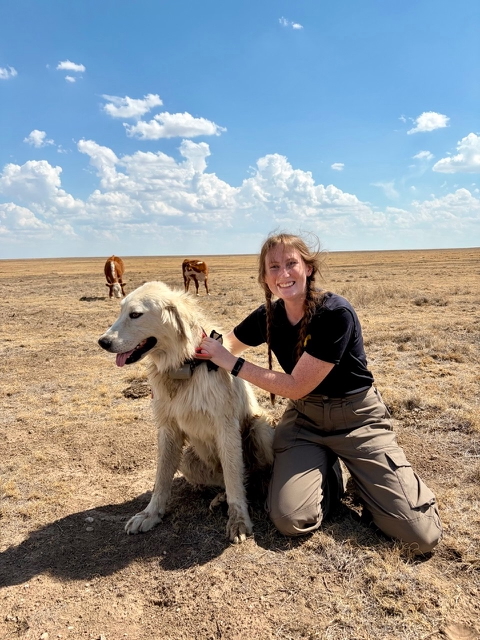
Researchers with Texas A&M AgriLife are investigating whether the presence of livestock guardian dogs may increase the survival chances of swift foxes – the state’s smallest fox species – by altering the behavior of coyotes. (Haley Sloan/Texas A&M AgriLife)
In the Texas Panhandle, two livestock guardian dogs patrol a herd of cattle grazing the Rita Blanca National Grasslands. Although their singular focus is protecting the herd from would-be predators, their presence may make them wildlife conservation allies.
Researchers with Texas A&M AgriLife are interested in whether the animals may increase the survival chances of the swift fox — a diminutive native fox believed to number fewer than 250 statewide.
Haley Sloan, a doctoral student in the Texas A&M Department of Rangeland, Wildlife and Fisheries Management, Bryan-College Station, said several factors have contributed to the dramatic decline in the state’s smallest fox species, roughly the size of a domestic housecat.
“The swift fox relies on the shortgrass prairie ecosystem once found across the Panhandle and into western Texas,” Sloan said.
Protection needed on an altered landscape
Dana Karelus, Ph.D., state mammal specialist with the Texas Parks and Wildlife Department, TPWD, Austin, said only 40-50% of the shortgrass prairie ecosystem remains due to habitat loss and fragmentation.
“Coyotes can take advantage of the cover provided by the taller vegetation that has grown into these areas, resulting in coyote predation being a leading cause of mortality in swift fox populations,” Sloan said.
Sloan’s research aims to find out if the presence of livestock guardian dogs paired with a cattle herd can reduce swift fox mortality by altering the behavior and habitat usage of coyotes in the area.
“The idea is that livestock guardian dogs are essentially filling the role of a larger predator that alters the behavior of coyotes,” she said. “The hope is that the dogs’ presence will deter coyotes, thereby reducing swift fox mortality and allowing the foxes to start using areas where the coyotes are being excluded.”
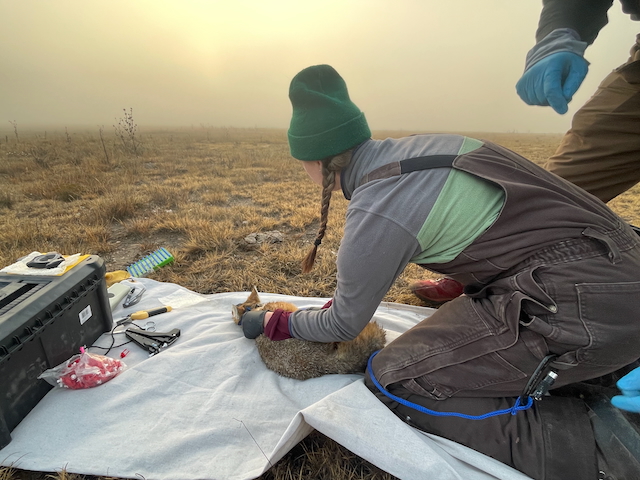
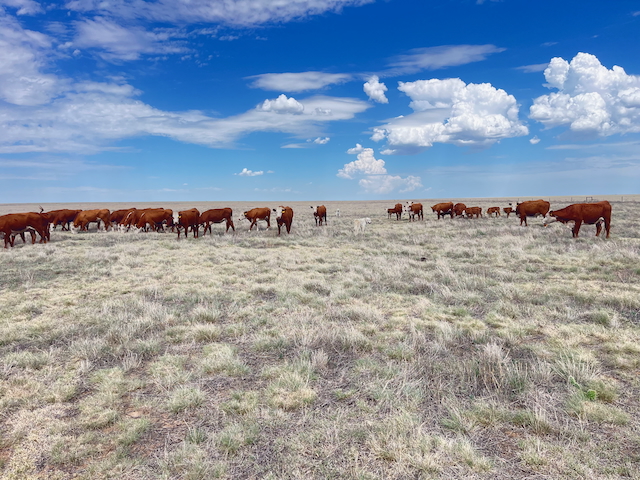
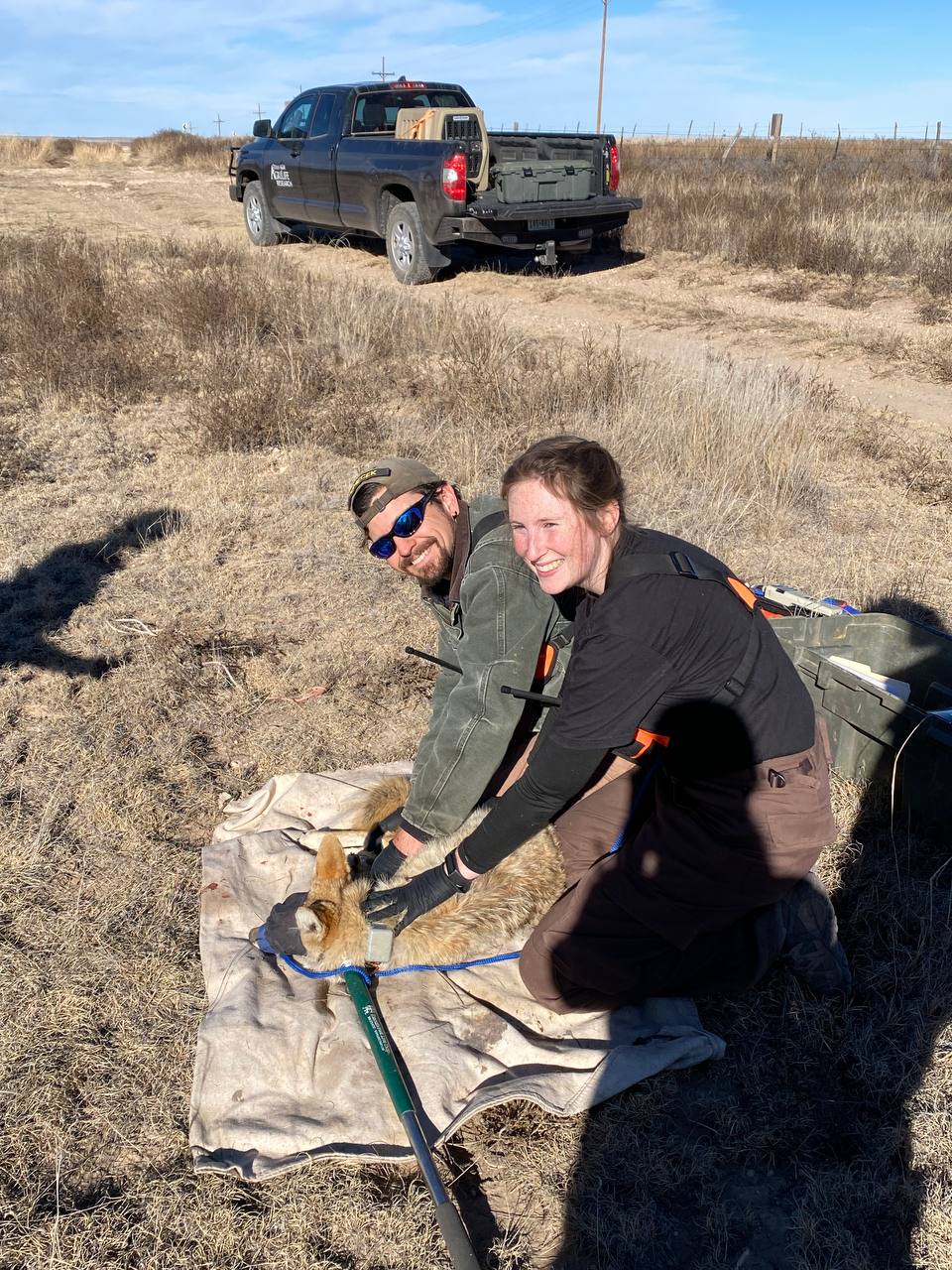
To measure the potential effect livestock guardian dogs have on the habitat use of coyotes and swift foxes, researchers equipped swift foxes and coyotes with GPS collars prior to the launch of a multi-year project. This work is one component of a larger research effort funded by the Texas Parks and Wildlife Department to increase the survival and recovery of swift foxes. (Haley Sloan/Texas A&M AgriLife)
A collaborative effort for species recovery
This work is one component of a broader research effort co-led by John Tomeček, Ph.D., associate professor in the Department of Rangeland, Wildlife and Fisheries Management, Thrall, and researchers at Texas Tech University, with funding from TPWD.
Dallam County is currently the only known county in the state with a swift fox population. Sloan’s work, coupled with additional research on applied habitat management and public perception of the species, is part of a TPWD plan to better understand how to increase survival and recovery of the species.
Working lands support wildlife and agriculture
Given the swift fox’s small size and diet of insects, plants and small rodents, the species poses no threat to livestock like cattle, sheep and goats — making them ideal neighbors on ranching operations that also rely on healthy rangelands.
“Our prairies and the wildlife they support are part of our natural heritage and ranching history,” Sloan said.
She said if incorporating livestock guardian dogs with cattle herds does prove successful in altering the behavior of coyotes, it offers two potential benefits: improved chances of swift fox survival and a reduced threat of livestock predation, especially during calving season.
To measure the potential effect livestock guardian dog presence has on coyote behavior and landscape use, Sloan and other researchers equipped coyotes and swift foxes with GPS collars prior to the launch of the three-year project.
This baseline data will provide a clear snapshot of movement of both species before and after livestock guardian dogs — also equipped with GPS collars — are introduced with the cattle herd.
A novel approach to wildlife conservation
Using livestock guardian dogs to aid in wildlife conservation is not common, but shows just how adaptable the practice can be, said Bill Costanzo, Texas A&M AgriLife Extension Service livestock guardian dog specialist in the Department of Animal Science, San Angelo.
Costanzo and colleagues at the Texas A&M AgriLife Research and Extension Center at San Angelo assisted the project by training the livestock guardian dogs now paired with the cattle herd.
Livestock guardian dogs are typically paired with smaller livestock like sheep and goats, meaning Costanzo had to adapt the training process to ensure the puppies were safe while bonding with the much larger cattle.
“We now have a set of procedures to help guide the bonding process with guardian dogs and cattle,” he said. “Hopefully we can continue to hone this process a bit more and replicate the use of livestock guardian dogs with cattle on a larger scale in the future, because there are a number of interesting things we would like to investigate.”
The livestock guardian dogs were introduced with the cattle herd to graze the Rita Blanca National Grasslands this summer, and although it is too early to report any initial findings, Sloan is optimistic.
“I’m happy to report right now the dogs are doing great,” she said. “The producer involved in the project hasn’t lost any calves to predation, and I have hope we’ll have similar positive outcomes for swift foxes in the vicinity of the herd.”