

Texas Crop and Weather Report
Link to story received from media relations for Texas A&M AgriLife – Email: news@ag.tamu.edu
Author of the article below is Sarah Fuller
Story comes from AgriLife Today – Texas A&M AgriLife’s Digital Magazine and Newsroom
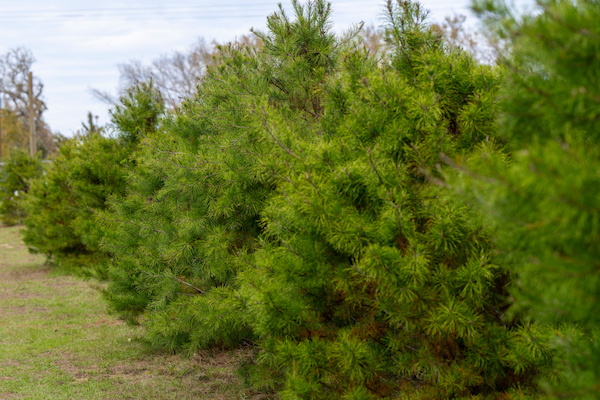
Virginia pines at Kelumac Christmas Tree Farm on Monday, Nov 27, 2023, in Bryan, Texas. (Michael Miller/Texas A&M AgriLife Marketing and Communications)
With an ample supply of Texas-grown Virginia pine and imported varieties like Fraser fir from other U.S. states, Texans should have plentiful options to choose from as they select this year’s live Christmas tree, according to Texas A&M AgriLife experts.
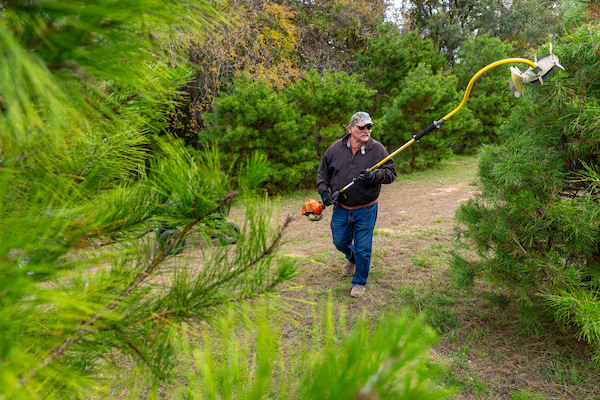
Texans in search of a live Christmas tree should have ample stock to select from this year at the state’s more than 200 Christmas tree farms. (Michael Miller/Texas A&M AgriLife)
“I’ve visited a couple of farmers, and their crops look excellent,” said Fred Raley, Ph.D., Texas A&M Forest Service tree improvement and nurseries department head, Bryan-College Station. “Despite summer drought conditions, we had a really wet spring that resulted in a lot of good growth.”
In addition to timely spring rains, many Texas Christmas tree farms also rely on irrigation to mitigate stress during the state’s notoriously dry, hot summers, said Andrew King, Ph.D. Texas A&M AgriLife Research ornamental specialist and assistant professor in the Texas A&M Department of Horticultural Sciences, Overton.
Ongoing demand for live trees expected to continue
Raley leads the Texas A&M Forest Service’s Virginia Pine Tree Improvement Program, which provides members of the Texas Christmas Tree Growers Association with a steady supply of improved seed stock selected for survival, growth rates and marketability across various ecoregions.
“We have doubled the size of our seed orchard to meet the needs of the Texas Christmas Tree Growers Association,” Raley said. “New grafted trees were also established this year and more will be established next year.”
Raley said an estimated 26,000 native-grown Christmas trees were cut in Texas last year.
To ensure Texas Christmas tree growers can replenish their inventory, Raley and his team annually harvest around 150,000 seeds to supply the state’s more than 200 farms.
“Over the next five-year period, projected sales of live trees remain steady, and I’m working to build up our inventory,” he said.
Expanding options beyond Virginia pine
Raley said Virginia pine remains the standard for most Texas Christmas tree growers, with about 20-25% also growing Leyland or Murray cypress.
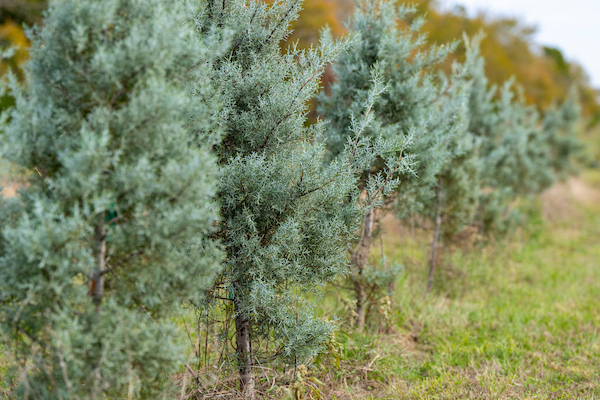
While Virginia pine remains the most reliable Christmas tree variety grown in Texas, roughly 20-25% of Christmas tree growers also grow a cypress variety, such as Leyland or Murray cypress. (Michael Miller/Texas A&M AgriLife)
To expand consumer options, Raley said about one-third of Texas growers also import Fraser firs to sell alongside Virginia pine.
“It is difficult to expand species choices, mostly due to the susceptibility of potential alternatives to cotton root rot,” he said.
Raley said cotton root rot is a limiting factor for Afghan pine, a species well suited for the soil and climate of Central and Southwest Texas.
Currently, Christmas tree producers growing Afghan pines in the Hill Country are struggling with cotton root rot, but he hopes to find a potentially resistant strain to support the expansion of this species as a viable tree crop.
King said these alternative species can help producers fill a niche and satisfy customers who may prefer a non-pine tree for the holiday season.
Aging producers, ongoing demand provide opportunities for new growers
Reflecting demographic trends across much of the agriculture industry, some Christmas tree producers are aging out of the business.
Raley and King said that while this may result in a small decline in Christmas tree farms at some point, it also provides an opportunity for younger individuals or families interested in participating in Texas’ $39 billion ornamental horticulture or “green” industry.
Because Christmas tree farms can operate on as little as 5-10 acres, producers can incorporate this crop into broader operations.
King said some of the most successful Christmas tree farms go beyond simply growing trees to provide a full agriculture tourism experience across seasons — from pumpkin patches and train rides in the fall and winter, to cut flowers and pick-your-own produce in the spring and summer.
“The key thing is that there is ongoing demand and potential for growth and diversification in the Texas Christmas tree industry,” King said. “There is a lot of opportunity looking forward.”
AgriLife Extension district reporters compiled the following summaries:
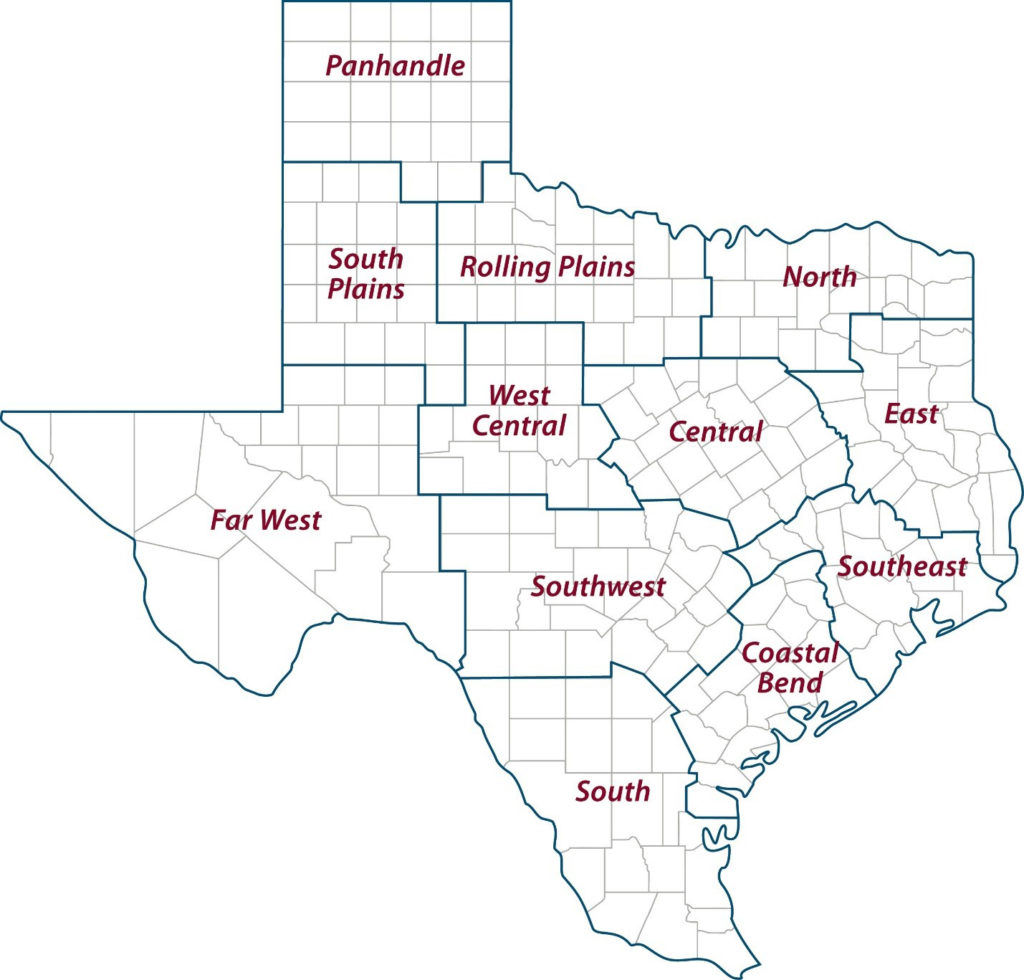
A map of the 12 Texas A&M AgriLife Extension Service districts.
Panhandle
The first good frost of the season arrived at the end of the reporting week, and a killing freeze was reported in parts of the district. Topsoil moisture levels were short to adequate while subsoil conditions ran short to surplus. An El Niño pattern continued to add moisture, and one area was only an inch behind average rainfall after being 9 inches behind in early September. Growers continued working through the remaining acres of cotton, soybeans and sunflowers, and cotton harvest was well over half complete. The week’s weather was favorable for planting the acres still intended for small grain production, whether for forage-silage, grain or as a cover crop. Winter wheat was nearly all planted, most acres had emerged, and the crop was in poor to excellent condition. Pasture conditions improved gradually. Last summer’s extended drought curtailed forage production for hay, and many producers imported hay from other regions to have adequate supplies available for winter. Livestock conditions were fair to good and continued to improve with the pastures.
South Plains
Cool days, foggy and damp mornings, and mostly cloudy skies held through the week, with a first freeze forecast for the coming week. Brief rain showers fell early in the week. Topsoil and subsoil moisture levels were short to adequate. Wet mornings and weekly rain kept producers out of the fields and harmed some crops, with another system arriving each time harvest resumed. Cotton bolls were nearly all open, and harvest was more than halfway complete. About half the ginning was completed, and quality has been good on some of the early harvested cotton. Some producers were still waiting on a hard freeze to defoliate lower-quality cotton, while other acres were shredded or fenced for cattle to graze. Harvest was expected to finish by the end of the month. Black-eyed peas harvested late because of a lack of irrigation could not be sold because of stains or mold. Winter wheat was nearly all planted, most acres had emerged, and the crop was in very poor to excellent condition. Wheat pastures took off with recent rains and warm temperatures, and many were being fenced for grazing. Pasture grass also grew with the rain. Yearling cattle were turned out on winter wheat, and livestock grazed wheat alongside supplemental feed. Livestock conditions were very poor to good.
Rolling Plains
A hard freeze finally arrived at the end of the week, and heavy rain fell over the weekend in some areas. Rain of 1-2 inches the previous weekend helped winter grasses and perked up warm-season plants. Topsoil and subsoil moisture levels were very short to surplus. Fall moisture continued to be abundant with good fall temperatures. Continued moisture halted destruction of failed cotton. Cotton bolls were largely open, and harvest was about half complete. The freeze was expected to get producers with harvestable cotton moving in the coming days. Winter wheat was nearly all planted, most acres had emerged, and the crop was in poor to excellent condition. A few pest issues showed up in wheat because of warm, moist conditions, and the crop struggled in a few areas from a lack of moisture over the last two weeks. Winter weeds and grasses emerged in pastures and provided early green growth. A few producers cut and baled hay in bottom lands where growth was better, though quality and quantity were not good. There was abundant hay stacked in some areas of the district, while elsewhere there might not be enough forage to reach the next growing season. Stocker calves were turned onto wheat that was in mostly good condition, and cattle grazed winter annuals in pastures. Routine cattle feeding settled in with the freeze, and most producers continued feeding hay and supplements. Livestock conditions were very poor to good. Wildlife moved at all hours of the day and were seen on wheat early and late. Wildlife food plots were about as good as they can get for November.
North
Warm, moist conditions pushed temperatures to near 80 degrees midweek before a strong cold front came through Sunday and dropped temperatures significantly. No first frost occurred, but one was expected later in the week. Scattered showers delivered 1-2 inches in parts of the district, while other areas caught only light showers. Topsoil and subsoil moisture levels were very short to adequate. Exceptional drought held on another week in parts of the district, where ponds were very low to dry. Some producers were hauling water to livestock. Winter wheat was mostly planted with emergence just past the halfway point. Late-planted wheat had not emerged. Rain was needed to germinate the planted wheat. Winter wheat was in very poor to good condition. Cotton and soybean harvest was complete. Volunteer corn, soybeans and warm-season weeds grew in wheat and fallow fields, and Hessian fly adults were observed in traps. Winter vegetables continued to excel, with cabbage, collards, kale and radish as standouts. Planted carrots were emerging, and planting was set to continue into December. Hydroponic greenhouse vegetables progressed well in sunny, cool weather. Livestock were in fair to good condition, and more producers started supplementing hay with the colder weather. Feral hogs were active.
East
The coldest temperatures of the fall pushed some growth toward dormancy, with lows of 35-45 degrees and highs of 70-80 degrees. A first freeze was expected in the coming week. Rainfall was limited or absent, amounting at best to half an inch in very few spots. Topsoil and subsoil moisture levels were very short to adequate. Ponds, lakes and rivers remained low, and reporters expected burn bans to return. Cool-season forages were in better shape after recent rainfall in some areas, but rain was still needed for winter pastures to take off. Summer grass stopped growing with the cooler temperatures, and some ryegrass tried to come up. Winter wheat was in poor to good condition. Producers were worried about pasture mealybug, which was present in the southern portion of the district and moving north. A huge acorn crop had cattle eating acorns in some areas, especially where grass was short. Hay feeding was in full swing for some producers, and many continued to supplement with protein and energy sources. Fall calves were growing well. Livestock conditions were very poor to excellent. Producers reached out to local sale barns about hay needs or disbanding herds as the district moved into a second year of drought with a lack of quality feed sources. Average prices for all weight classes of feeder steers and heifers finished $2 to $8 per head higher; slaughter cow prices held steady with the previous week and slaughter bull demand improved $3 to $5 per head. Feeder calf demand stayed brisk, especially on front-end classes of feeder calves. Calf markets rose slightly at some auctions while cows steadily declined at others. Feral hogs were very active, rooting up pastures and hay meadows.
Far West
Colder temperatures early in the week gave way to slightly warmer, drier conditions across the Big Bend, while other areas were unusually warm during the day. Temperatures ranged from the mid-70s to the high 40s in parts of the district, with above-average humidity and heavy morning dews. Topsoil moisture levels were very short to adequate while subsoil conditions were very short to surplus. Tremendous rains over the past couple of weeks replenished the topsoil and began filling the subsoil. Other areas caught scattered, short-duration showers or little to no measurable rainfall. Fields remained muddy in places, with cotton harvested in the late afternoon in drier fields. Cotton harvest was well over half complete. In the El Paso area, most Pima cotton had been picked, with very little upland cotton this year. Wheat was mostly planted and looked great thanks to the rain. More was expected to go in as cotton came out. Pecan growers prepared orchards for harvest and were still waiting on a hard freeze. A last cutting of alfalfa was in progress. Pasture and rangeland stayed green with some minimal growth; range conditions remained good as the growing season came to an end and many winter weeds were expected to emerge soon. Calving was in full swing, and cattle condition continued to improve with supplemental feeding where needed. Livestock conditions were poor to good. Producers continued to monitor stock closely for New World screwworm with quarantine zones surrounding the area. Wildlife sightings were up, possibly because more producers were out checking cattle.
West Central
A mostly warm, dry week turned cool. Nights were cold, but no freezing temperatures were reported, and a first freeze was projected for the coming week. Two stations recorded around 1 inch of rain, while other areas caught only sprinkles. Topsoil and subsoil moisture levels were short to surplus, and topsoils stayed moist under cloudy conditions. Rainfall early in the week left some fields wet, limiting equipment access and slowing fieldwork until conditions dried. Fields remained too wet to finish planting small grain in parts of the district. Cotton harvest was a little over half complete and was slowed tremendously by the moisture. Additional acreage was taken out by insurance as losses. Winter wheat was nearly all planted, and most acres had emerged in fair to good condition. Most wheat planted for grazing showed good fall growth. Winter grasses grew well, and winter annuals added green growth to native range. Cool-season grasses and forbs showed good emergence, and some warm-season grass was still left. Some producers cut hay in recent weeks because of good weather and growth. The pecan crop was not going to be as good as first thought, with the price down to $2-$2.10 per pound from $2.40 per pound for early varieties. Cattle grazed emerging wheat and winter grasses where available. Cattle started to fatten up well. Supplemental feeding continued along with mineral intake, and producers stayed vigilant for New World screwworm. Livestock conditions were fair to good.
Central
Mostly mild and dry conditions held over the past week, with daytime temperatures from the upper 50s to the mid-70s before cooler weather moved in over the weekend. A first light frost arrived in some areas. Rainfall was scattered, with more than 1 inch in parts of the district, trace amounts in others, and none in some areas. Topsoil and subsoil moisture levels were very short to surplus. Cooler temperatures and weekend rains slowed wheat planting progress. Stock tanks continued to be a concern and have been reported as empty or very low across the region. Winter wheat was nearly all planted, and most acres had emerged. Recent rains helped planted wheat emerge, and it was in very poor to good condition, with minimal pest issues despite talk of Hessian fly already being observed. Small grain fields, including wheat and oats, would benefit from additional moisture to support continued establishment. Cotton harvest was nearly finished. Pastures and rangeland greened up after the week’s rain; cool-season grasses started to develop, while warm-season grasses moved into dormancy. Ryegrass planted in mid-October caught good, timely rains, and had good stands across the region. Warm-season grasses growing alongside emerging cool-season annuals made a good mix for late November. Pastures were poor in some areas and fair to good in others. Cattle remained in good condition moving into the later part of fall, and supplemental feeding continued with hay.
Southeast
Rain over the weekend was much needed, delivering about 0.75 inches across some areas and 1 1/2 to 2 inches in others. Cooler temperatures were expected to be a factor in the coming week. Topsoil and subsoil moisture levels were very short to adequate. The precipitation helped relieve dry conditions, though more was needed. Ponds were filling up in some areas. Cotton and soybean harvest was complete. Pastures were in fair condition, and wheat was growing. Livestock looked good and were in fair condition across much of the district.
Southwest
Cooler weather settled in with a few foggy mornings, and temperatures ranged from the mid-40s at night to the mid-70s during the day. A cool start to the week gave way to a mild, pleasant finish, and a cold front was expected to bring damp, cool conditions for Thanksgiving. Rainfall was spotty. Topsoil and subsoil moisture levels were short to surplus, and soils stayed moist from recent rains. By weeks end, fields dried enough for producers to finish planting winter wheat. . Dryland wheat and oat fields got a good start this fall, and small grains were growing well. Range conditions looked great. Livestock received supplemental forage, and a few producers winterized facilities and increased feed with the cooler weather coming. Livestock conditions were very poor to good. Surveillance of livestock continued for New World screwworm. Deer were in rut, and hunters reported that harvested deer were in good shape.
Coastal Bend
Rain continued across the district, replenishing moisture in the ground and lifting burn bans in some areas. Temperatures dropped with a new cold front late in the period. Topsoil moisture levels were short to surplus while subsoil conditions were short to adequate. Soil moisture conditions have improved greatly since September. Cotton harvest was nearly complete. Some gins finished while the rest were close. Winter pasture preparation and planting continued and progressed well on adequate moisture. Winter wheat was more than half planted and in very poor to good condition. Pecan harvest continued, though the crop was very poor this season. Range and pasture conditions were good for moisture. Pastures remained green, but warm-season pastures slowed with shorter days and cooler weather. Armyworms were seen and treated in some winter pastures. Haying was put off again because of wet conditions. Producers who stocked heavier fed hay to beef cow herds. Livestock conditions were poor to excellent.
South
Mild to seasonably warm days with cool mornings held across the district. Most of the district received no measurable rainfall, though a few scattered showers fell in some areas and additional rain was expected over the weekend. Topsoil and subsoil moisture levels were short to surplus. Row crop producers resumed field operations, including herbicide applications and tillage, and farmers who had been sitting idle on the turnrow since harvest were expected back in the fields with the new weed growth. Cool-season vegetables progressed well, and the harvest of leafy greens was underway. Citrus harvest continued for certain varieties while later-maturing varieties continued to mature. Fall oats, triticale and ryegrass were up and growing. Most strawberry growers were done planting, with the larger operations getting close. Forage producers made their last cutting of the year. Some took advantage of improved field conditions to bale hay, and others considered a second cutting before the first frost. Rangeland improved or held steady with last week’s rains and mild, sunny days, and pastures greened up some. Improved pastures continued to benefit from previous rainfall while overgrazed acres showed little sign of rebound. Beef cattle producers supplemented herds with hay and protein and looked to stock up on hay for the season ahead. Producers slowed on culling cows, and fall-born calves were dropping. Livestock conditions were poor to good. Parts of the district were under New World screwworm quarantine while other portions were under surveillance. Producers remained vigilant, as current weather conditions continued to favor the establishment and spread of the pest. Hunting season was underway. Wildlife were very active and in good condition. Wildlife managers reported excellent quail populations, and deer harvested this season showed above-average antler quality.