

From smokers to air fryers, expert shares cooking methods and food safety tips
Link to story received from media relations for Texas A&M AgriLife – Email: news@ag.tamu.edu
Author of the article below is Torie Noellsch
Story comes from AgriLife Today – Texas A&M AgriLife’s Digital Magazine and Newsroom
Your oven isn’t the only way to cook a juicy, flavorful turkey that your family will rave about this Thanksgiving.
Rebecca Dittmar, Texas A&M AgriLife Extension Service food safety education program specialist in Kerrville, said online cooking content is reshaping the way people think about the traditional Thanksgiving meal.
“Social media trends, new cooking technologies and a desire to elevate the holiday dining experience are inspiring home cooks to embrace alternative turkey preparation methods to achieve a juicier, more flavorful product,” Dittmar said.
Whether you want to try something new or free up oven space, Dittmar shares tips for planning, cooking safely and choosing a method.
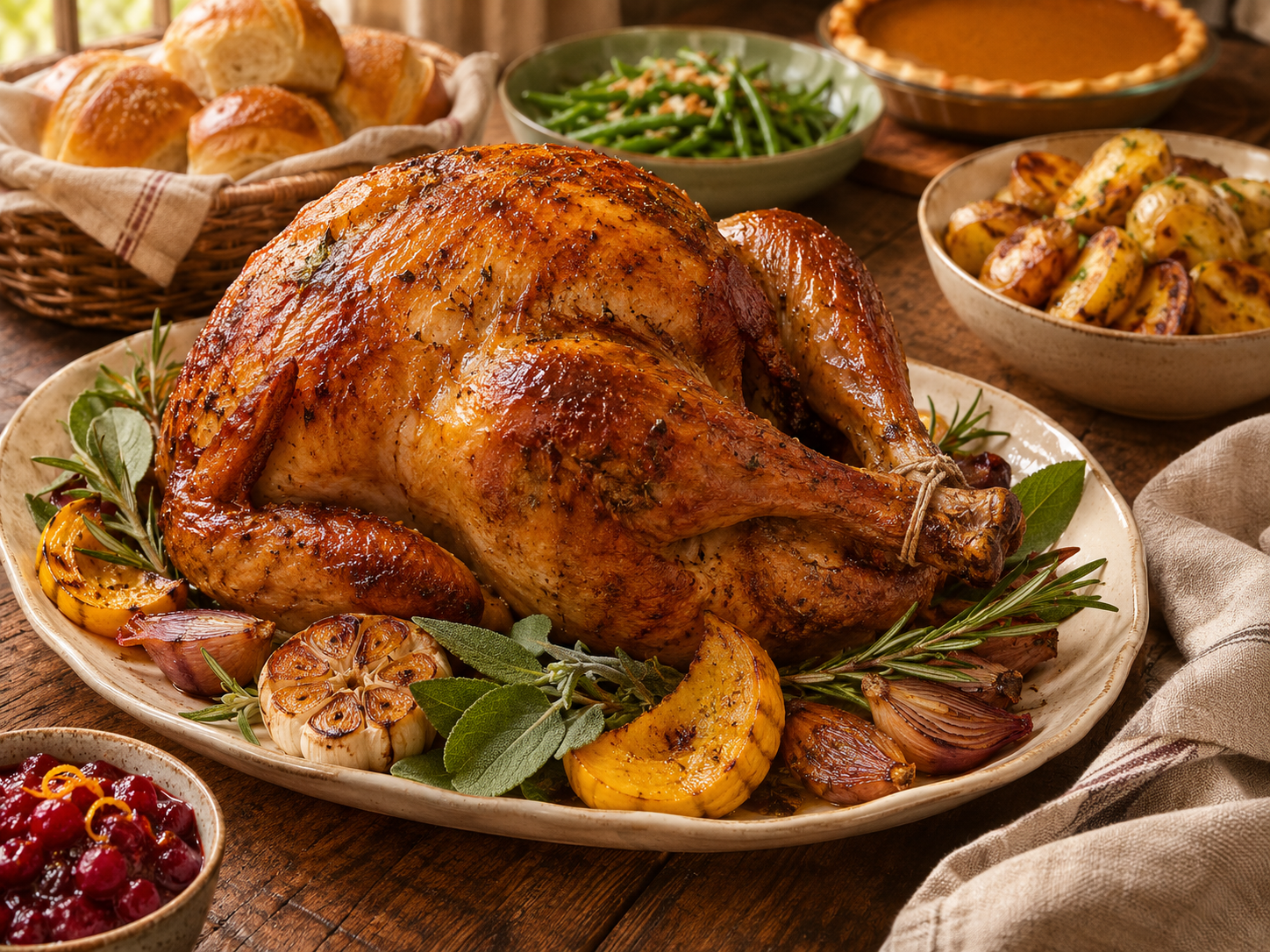
Traditional oven roasting isn’t the only way to get a delicious turkey to the table this Thanksgiving.
Turkey Basics: How much to buy and how to cook it safely
Before you try a new cooking method, Dittmar suggests three simple tips to ensure you have enough meat and cook it safely.
Take a headcount, estimate your turkey size
Before shopping, count how many people you’ll be feeding. Plan for about 1 to 1 1/2 pounds of turkey per person.
Allow enough time to thaw your turkey safely
You can thaw a frozen turkey:
- In the refrigerator, allowing 24 hours for each 4 to 5 pounds of meat.
- Under cold water in its original wrapping, allowing 30 minutes per pound.
- In the microwave, without the wrapping, allowing 6 minutes per pound using the defrost function.
Check out Dittmar’s past article for specific thawing and food handling safety tips when preparing a turkey and handling leftovers.
Don’t wash raw turkey
Rinsing a raw turkey can splash bacteria onto sinks, counters and nearby food, increasing the risk of food-borne illness.
Cook turkey to the proper temperature
Regardless of your cooking method, Dittmar said the internal temperature of your turkey should reach at least 165 degrees in three places:
- The thickest part of the breast.
- The innermost part of the wing.
- The innermost part of the thigh.
If your turkey is stuffed, the center of the stuffing must also reach 165 degrees.
A meat thermometer is the best way to ensure your turkey is safe to eat without overcooking it.
Benefits and tips for each cooking method
These five cooking methods offer variety to traditional oven roasting.
Electric roaster oven: Traditional flavor in less time
Want the traditional roasted turkey taste in less time?
Dittmar said the advantage of an electric roaster oven is the concentrated heat in a smaller space. That often means less cooking time than a full-size oven, and it keeps your kitchen cooler.
Electric roaster cooking tips:
- Turkey size: Choose a turkey from 8 to 24 pounds.
- Temperature: Set the roaster to at least 325 degrees.
- Cooking time: Follow the U.S. Department of Agriculture Food Safety and Inspection Service general roasting guidelines.
Covered charcoal or gas grill: Ideal when cooking for a crowd
Need more oven space for the green bean casserole and pumpkin pie?
Dittmar said cooking your turkey on the grill outside keeps your oven available for other dishes. It’s also an ideal method if you need to cook multiple turkeys for a big crowd.
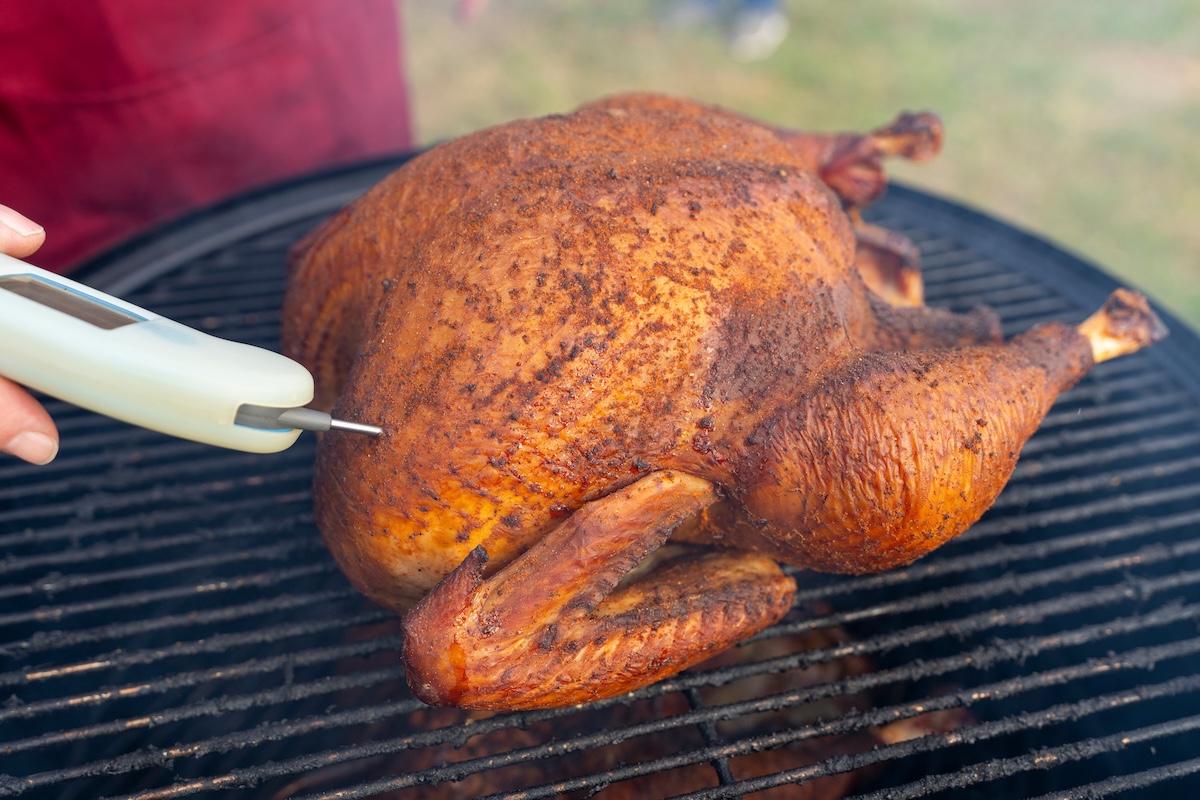
Like every other cooking method, a grilled turkey must reach an internal temperature of 165 degrees before it’s safe to eat. (Michael Miller/Texas A&M AgriLife)
Turkey grilling tips:
- Turkey size: Choose a turkey that weighs 8 to 16 pounds.
- Technique: Don’t stuff your turkey. Stuffing in the bird soaks up raw turkey juices, increasing the risk of foodborne illness. By the time the stuffing reaches 165 degrees, the turkey will likely be overcooked.
- Temperature: Maintain a temperature of 225-300 degrees.
- Cooking time: Grill for 15-18 minutes per pound.
- Safety: Use a drip pan to prevent grease dripping and flaring.
Smoker: Juicy meat with a smoky flavor
Smoking turkey results in juicy meat with a distinct flavor, and it keeps your oven free for other dishes.
Smoking takes longer because the turkey cooks over low, steady heat, Dittmar said. However, many cooking experts agree this method can help keep the meat juicy.
And if you plan to make the most of your leftovers, smoked meat tastes just as good the second and third time around.
Turkey smoking tips:
- Turkey size: Choose a turkey 8 to 12 pounds.
- Technique: Don’t stuff your turkey. Stuffing in the bird soaks up raw turkey juices, increasing the risk of food-borne illness. By the time the stuffing reaches 165 degrees, the turkey will likely be overcooked.
- Temperature: Keep the smoker between 225-300 degrees.
- Cooking time: Smoke for 20-30 minutes per pound.
- Safety: Use a drip pan to prevent grease dripping and flaring.
Deep fryer: Crispy turkey in less time
A deep fryer doesn’t make for the healthiest turkey. But Dittmar said it cooks a crispy and flavorful bird much quicker than other methods.
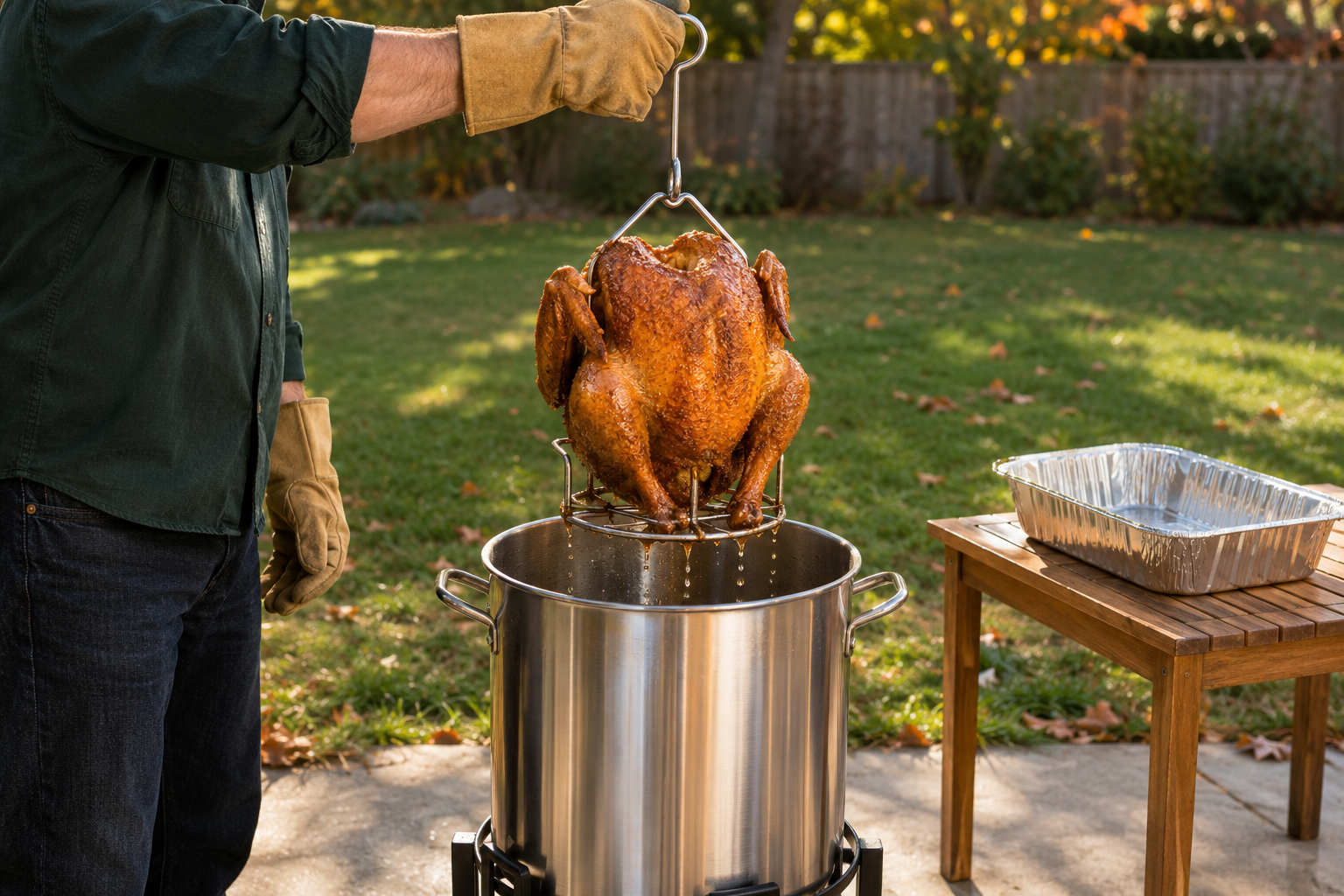
A deep fryer can create a crisp and flavorful turkey, but follow safety precautions to protect pets, kids and the cook.
Turkey deep-frying tips:
- Turkey size: Choose a turkey 8 to 12 pounds.
- Technique: Don’t stuff your turkey. The bird’s inside needs to stay unblocked so hot oil can move through it to safely cook to at least 165 degrees. Stuffing also traps moisture and can cause oil splatter, increasing fire and burn risk.
- Preparation: Thaw fully before frying to prevent oil splashes.
- Cooking time: Cook 3-5 minutes per pound.
- Oil temperature: Maintain an oil temperature of 350 degrees.
- Location: Place the fryer at least 10 feet away from your home on a level, sturdy surface.
- Safety: Use the fryer’s built-in thermostat to maintain oil temperature and prevent fire hazards. A deep-fry thermometer also works.
“When people add oil to deep fryers, they often forget it rises when they add their turkey,” Dittmar said. “A safe way to test is to use water first to estimate how much the oil will rise.”
Air fryer: Crispy turkey with less oil
Want a similar taste to a deep-fried turkey with less guilt after eating it?
“Air frying is a great alternative to deep frying,” Dittmar said. “It’s healthier, safer and easier to clean up.”
Turkey air-frying tips:
- Turkey size: Large outdoor air fryers and wall ovens with air fryer settings can accommodate whole turkeys. Check the manufacturer’s size limit.
- Preparation: Thaw completely before frying.
- Cooking time: Cooking times vary by air fryer. Follow the manufacturer’s instructions and ensure the internal meat temperature reaches 165 degrees before serving.
- Safety: Make sure there’s plenty of space around your turkey. Overcrowding the air fryer can cause uneven cooking and result in food safety issues if not all turkey parts reach 165 degrees.
Focus on family and food safety
Overall, Dittmar said to spend the day making memories with your loved ones, not stressing over the perfect cooking method.
“It doesn’t really matter what method you use to cook your turkey as long as you follow food safety guidelines,” she said. “Because an afternoon of eating your favorite pie and watching football beats a trip to the emergency room any day.”
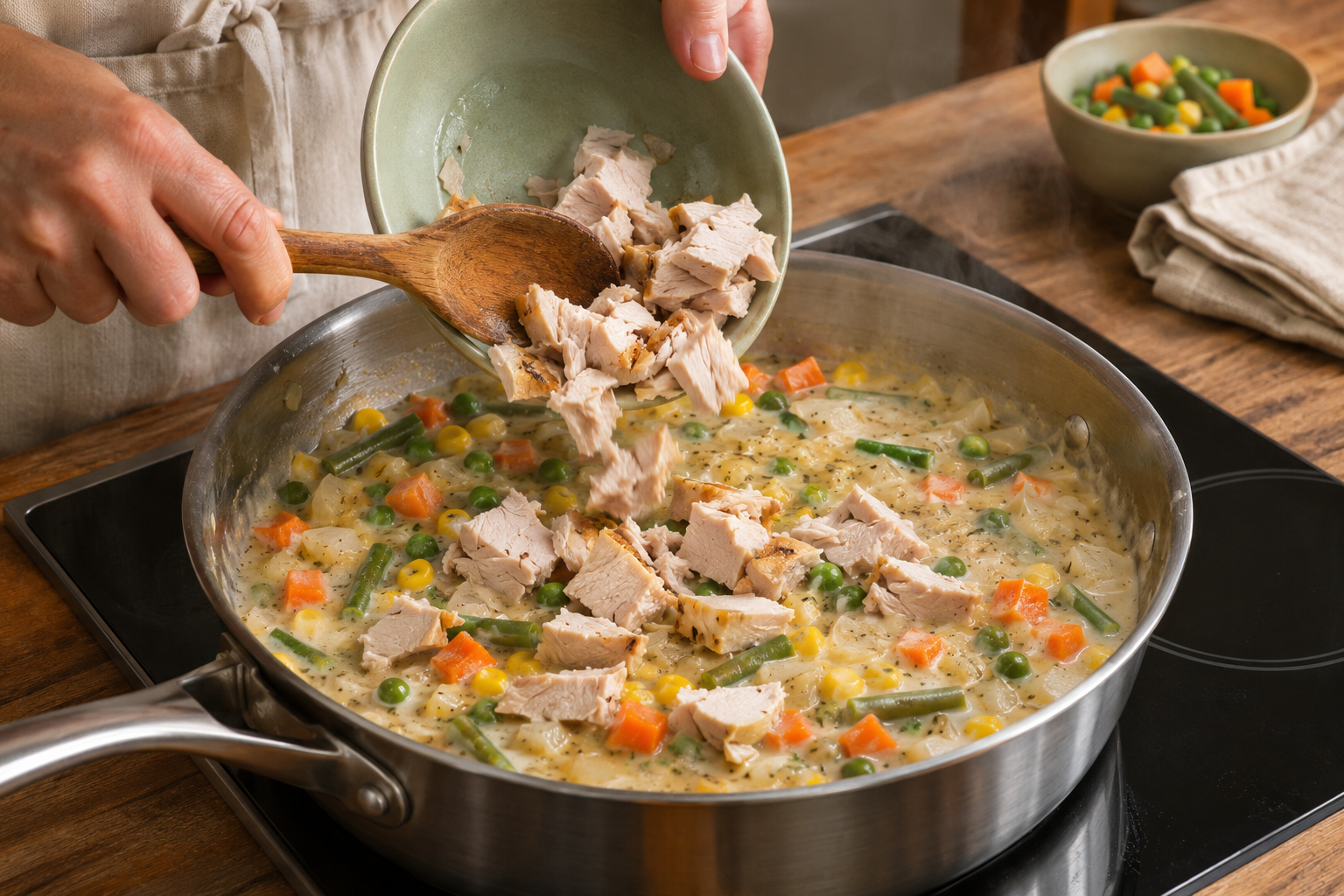
Explore Thanksgiving recipes
Looking for sides to serve with your turkey or ways you can repurpose your leftovers? You’ll be thankful you checked out these AgriLife Extension Dinner Tonight recipes.