

Texas A&M food science students’ first-place entry packs 9-10 grams of protein in dairy-free egg drink
Link to story received from media relations for Texas A&M AgriLife – Email: news@ag.tamu.edu
Author of the article below is Mamie Hertel
Story comes from AgriLife Today – Texas A&M AgriLife’s Digital Magazine and Newsroom
When doctoral student Ikenna Okehie offered samples of Ovivive at the Institute of Food Technologists’ annual conference in Chicago, he watched over 90% of people turn it down once they heard the word “egg.”
“They said, ‘Oh, it’s egg? No, no, I’m good,’” Okehie said. “When they tried it, they were really surprised. Like, how did you guys make it?”
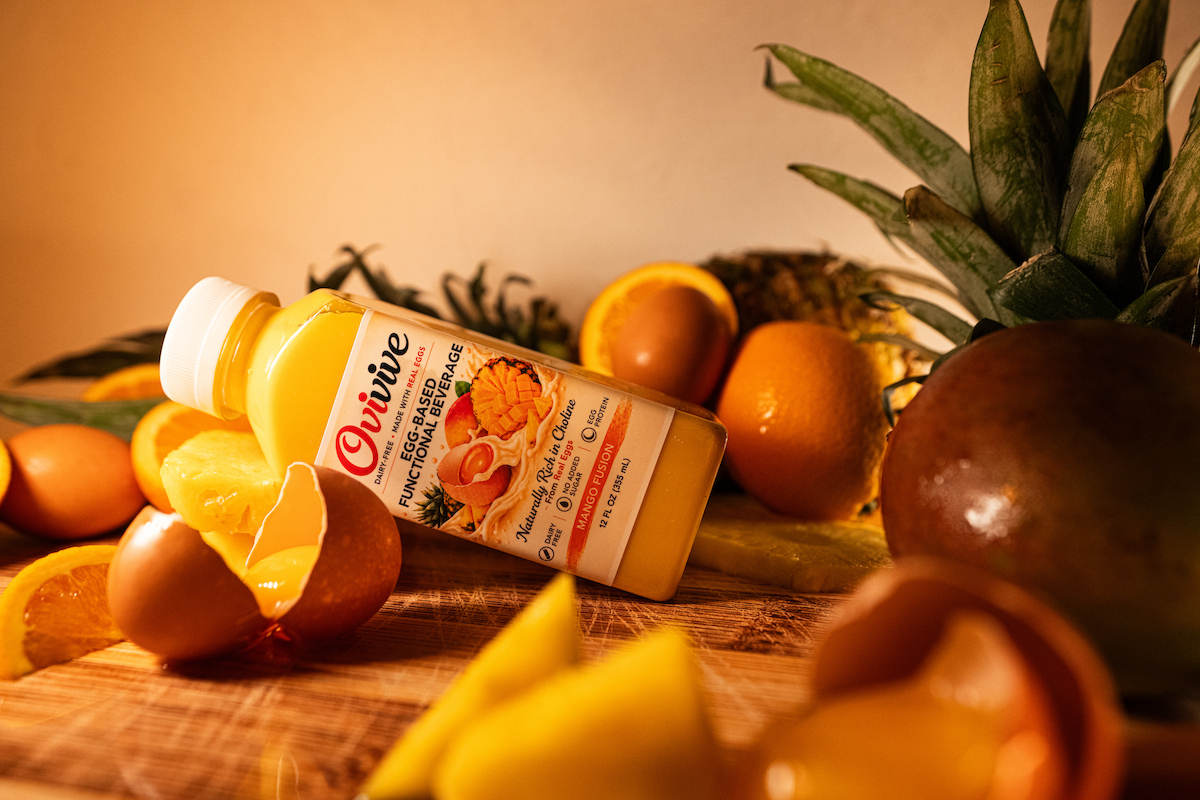
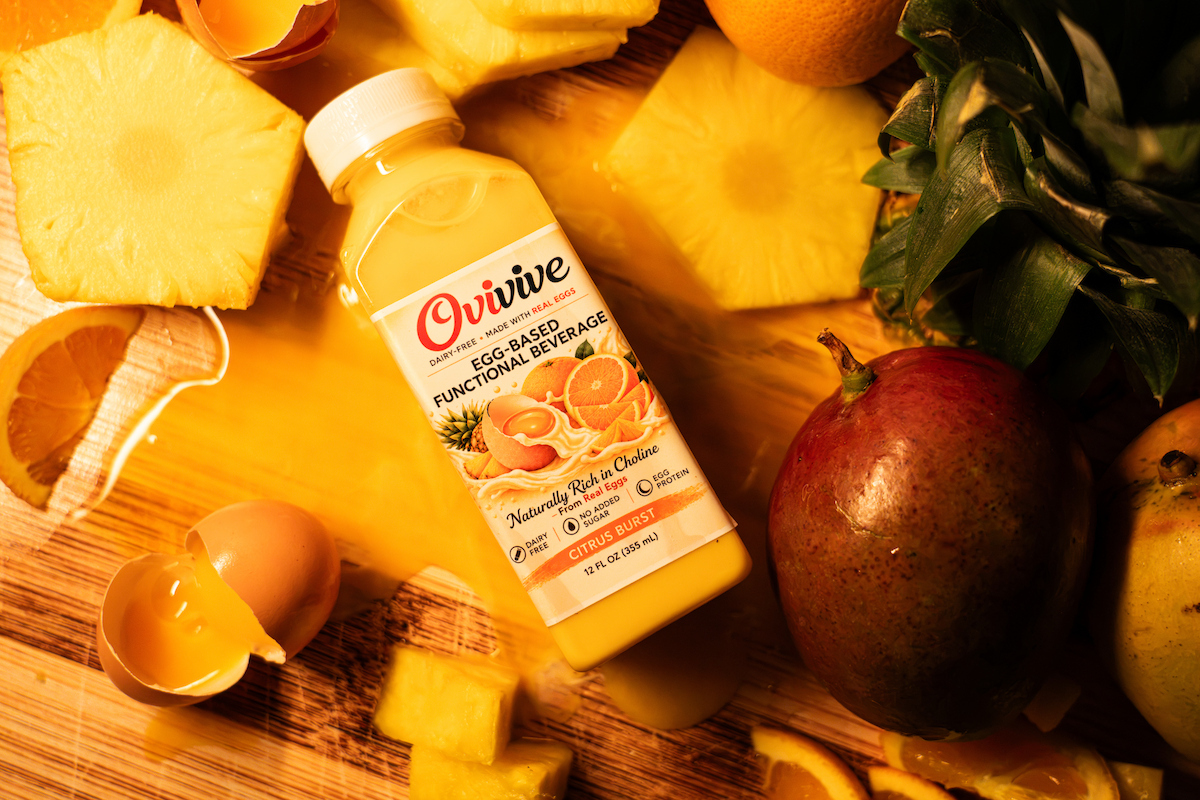
Ovivive is made with as few as three ingredients and delivers 9 to 10 grams of protein per serving, depending on the flavor. (Anna Haley/Texas A&M AgriLife)
Okehie, fellow doctoral student Muhammed Bilal Haider and undergraduate student Rebeka Saldivar, all in the Texas A&M Department of Food Science and Technology, spent 10 months building that surprise. In July, their egg-based beverage in three variants, made with as few as three ingredients, won first place and $8,000 in the American Egg Board’s Eggcelerator Lab product development competition.
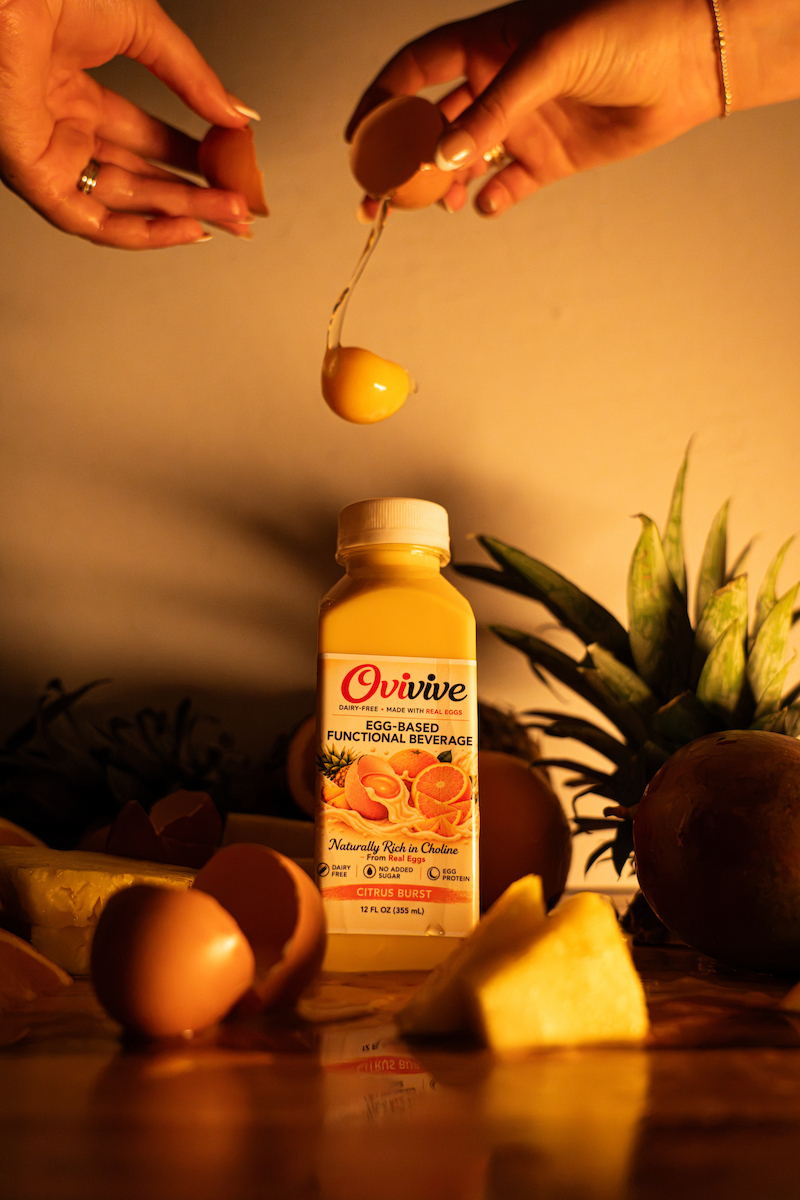
The American Egg Board’s Eggcelerator Lab competition required a beverage containing at least 5% egg. The team chose fruit to cover the egg smell and paired it with the color of the yolk. (Anna Haley/Texas A&M AgriLife)
The contest challenges students to develop market-ready products that use eggs in new ways, and this year’s theme was beverages. The team’s answer was a high-protein drink with a short ingredient list and no dairy, the kind of product people who skip dairy but still want protein are looking for. The contest also gave the students an hour in front of food industry leaders who could hire them one day.
Masking the egg
The challenge called for a beverage that was at least 5% egg, white and yolk included. Okehie, who came up with the original product concept and developed the initial formulation, led the team through the subsequent stages of product development and refinement. The team chose fruit to cover the egg smell and pair with the yellow of the yolk.
The first version came out too thin. Sensory panelists expected the thickness of a yogurt drink and said so. Haider proposed a fix for the texture by raising the temperature. Okehie further suggested swapping an early pomegranate blend for mango pulp to give it some body.
The final version comes in three flavors: Citrus Blast, Mango Fusion and Tropical Zing. Mango Fusion, which contains mango pulp, pineapple and egg had the highest overall acceptability. Depending on the flavor, each serving delivers 9 to 10 grams of protein.
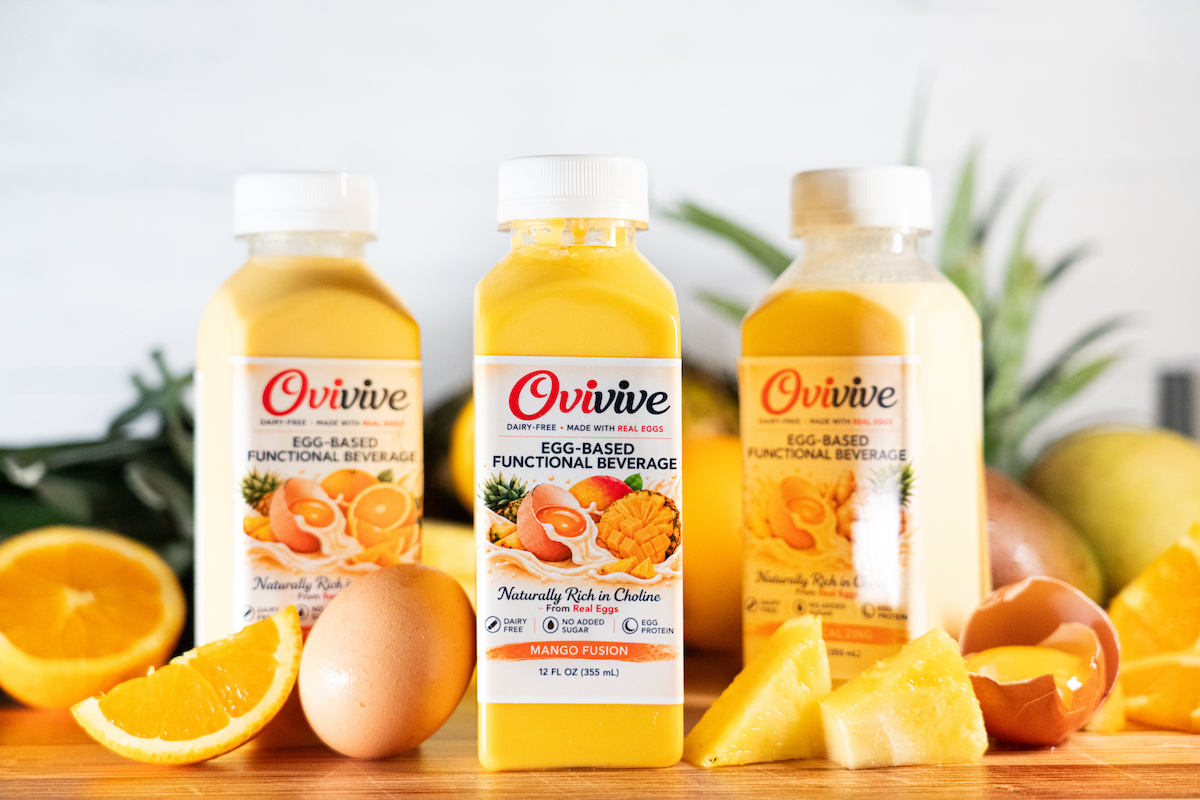
Mango Fusion, made with mango pulp, pineapple and egg, had the highest overall acceptability of the three Ovivive flavors. (Anna Haley/Texas A&M AgriLife)
“Most drinks on the shelf rely on additives for flavor and smoothness,” Haider said. “Ours gets all of that from the egg and the fruit.”
They named it Ovivive, from “ovum,” the Latin word for egg, and “revive.” It took someone outside the team to point out that the name also sounds a lot like their faculty advisor’s – Reza Ovissipour, Ph.D., associate professor in the Department of Food Science and Technology and a Texas A&M AgriLife Research scientist.
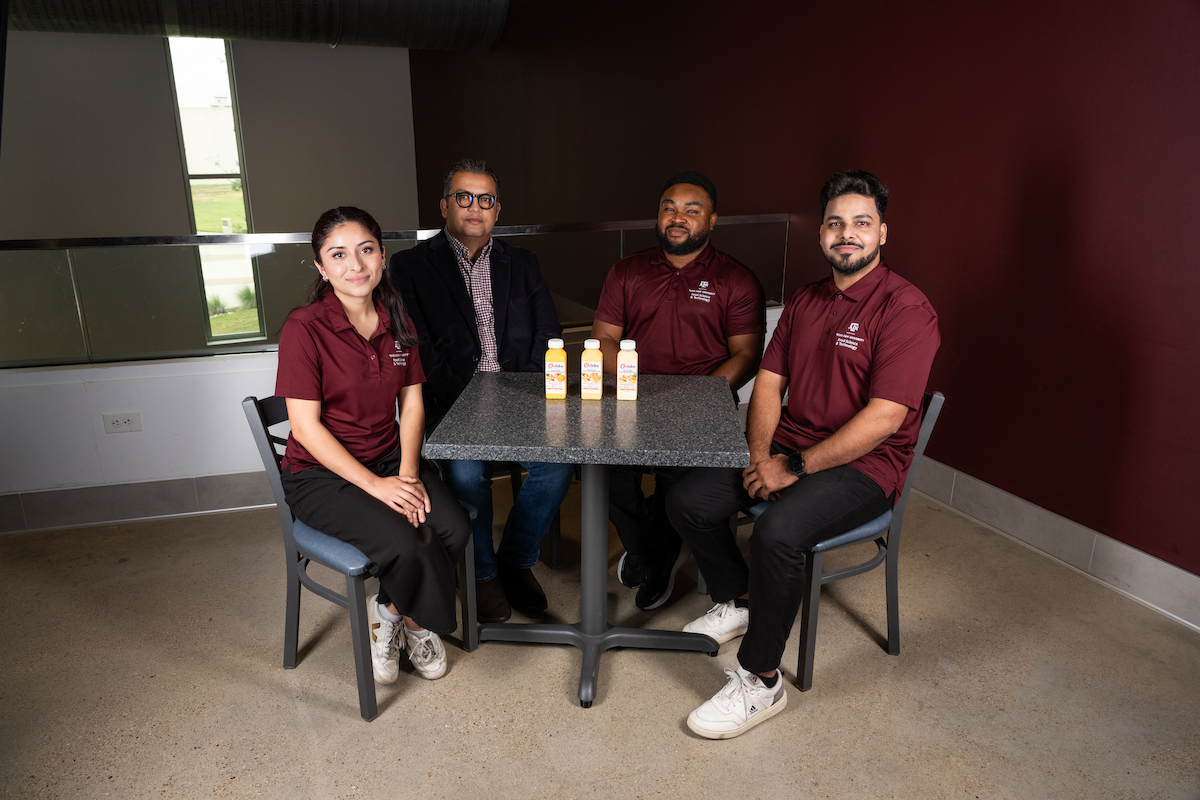
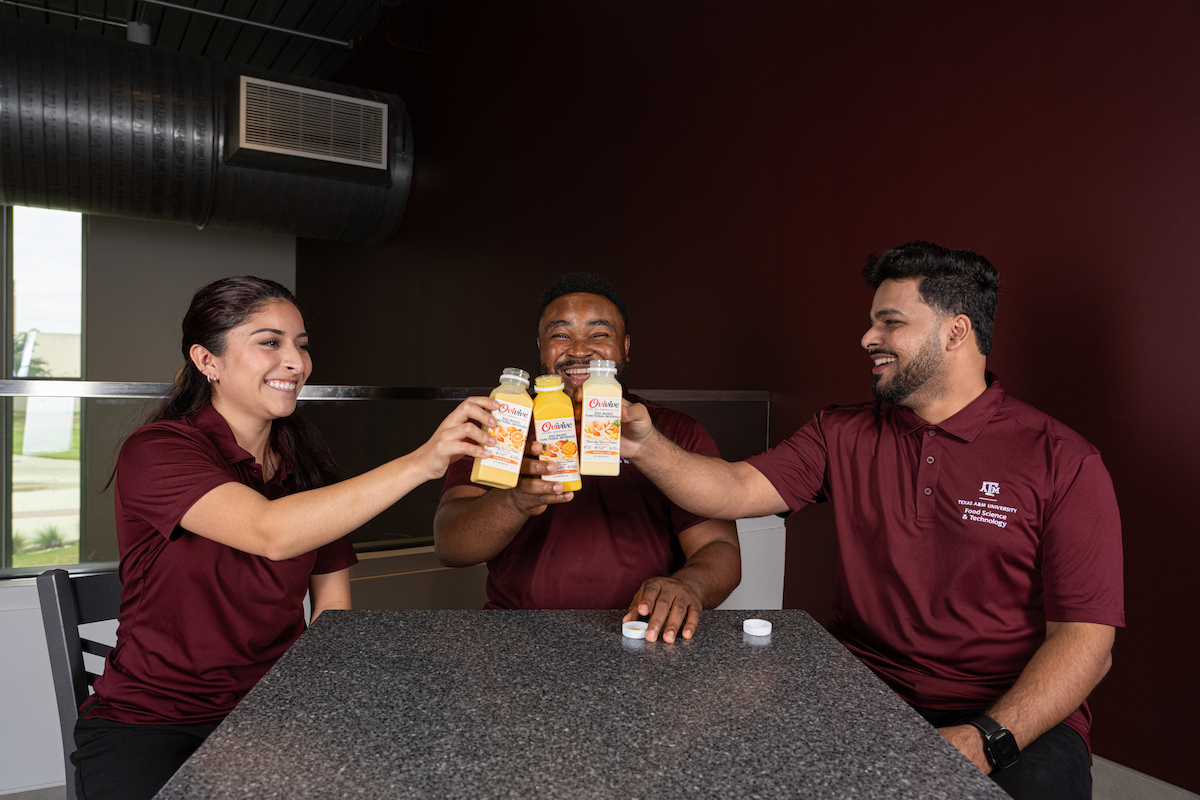
The Texas A&M Department of Food Science and Technology team of doctoral students Ikenna Okehie and Muhammed Bilal Haider and undergraduate student Rebeka Saldivar spent 10 months developing Ovivive with their faculty advisor, Reza Ovissipour, Ph.D. (Anna Haley/Texas A&M AgriLife)
Worth a try
After a review with an industry consultant and a second round of tastings, the team spent an hour walking a panel of industry directors through every formulation choice behind the recipe.
“Before we even started presenting, they were tasting our product, and I could see the excitement on their faces,” Haider said.
At the American Egg Board booth in Chicago, the team handed out over 150 sample bottles. For Saldivar, winning over the skeptics was the best part.
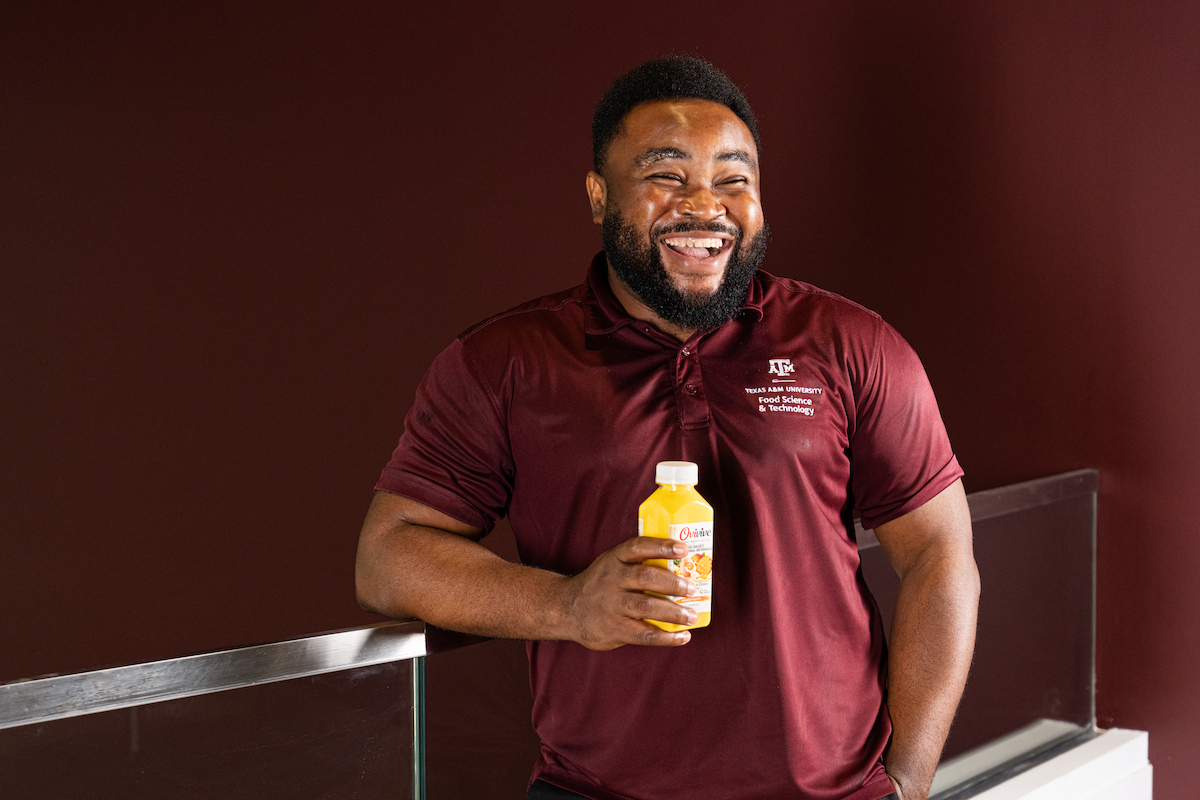
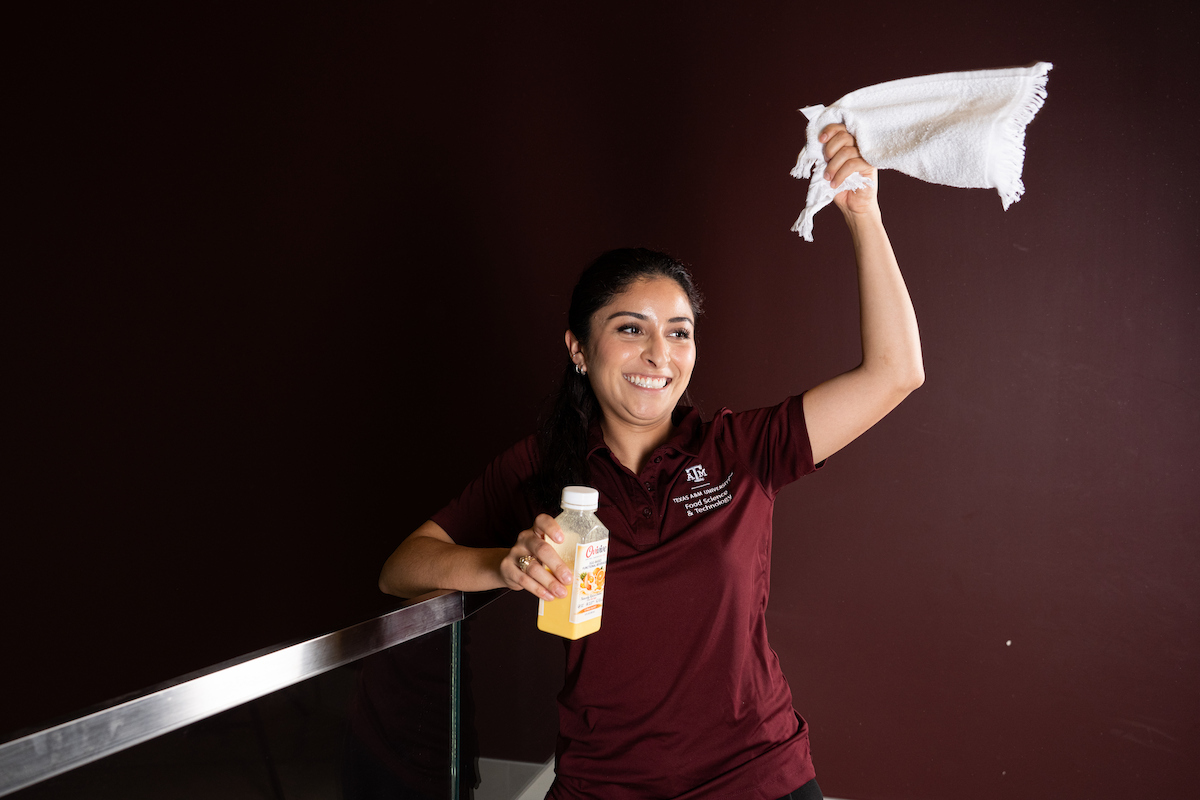
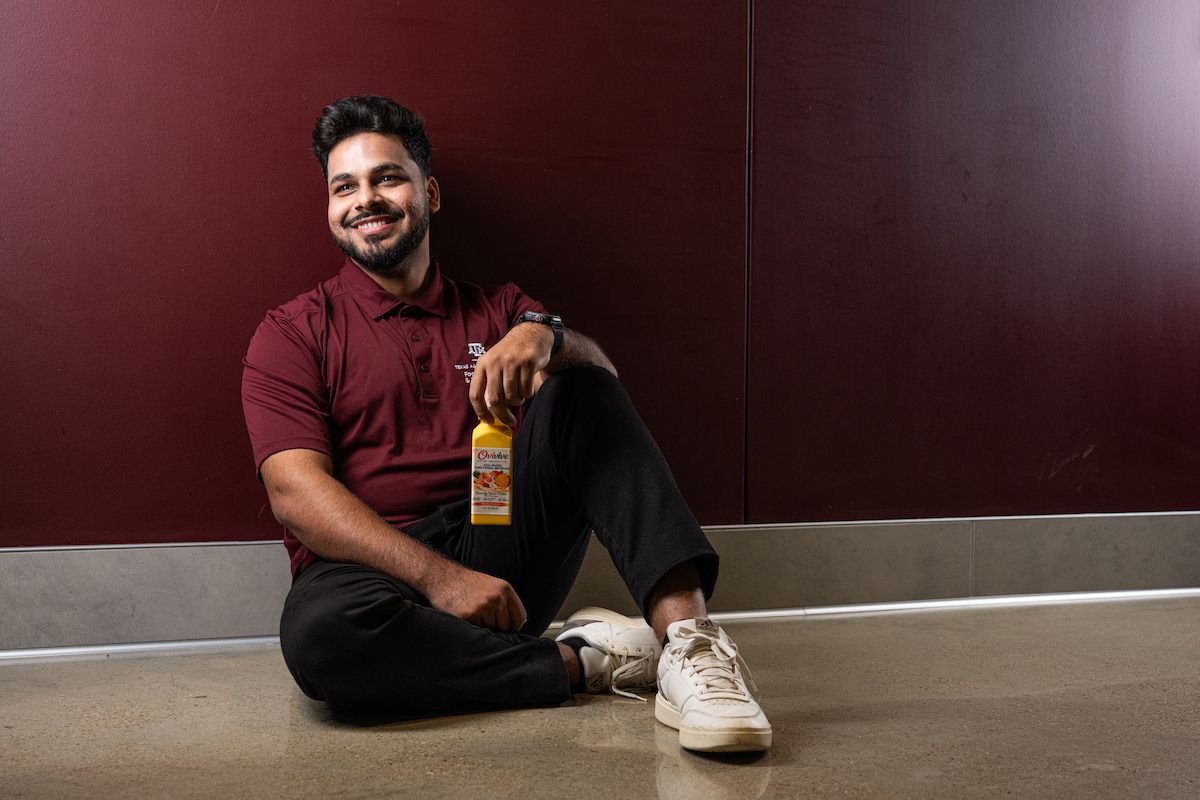
The team of doctoral student Ikenna Okehie, undergraduate student Rebeka Saldivar and doctoral student Muhammed Bilal Haider handed out more than 150 sample bottles at the American Egg Board booth in Chicago, where more than 90% of people initially turned down a sample once they heard the word egg. (Anna Haley/Texas A&M AgriLife)
“Watching people’s reactions after that first sip was so much fun,” she said. “They couldn’t believe how good it tasted and how smooth it was.”
Several tasters compared Ovivive to mango lassi, a yogurt-based drink popular in South Asia. Okehie said that was the goal: a flavor people already know, with egg doing the work of yogurt.
Ovivive is not commercially produced, so for now, every batch is mixed in the lab by these Aggies and poured into bottles the team orders for themselves. Each batch takes care to get right, but in the end, the egg was never the hard part. Getting people to take the first sip was.
Once they did, “No, I’m good” turned into “How did you make this?”
Study Food Science at Texas A&M
Three students turned an egg into a drink that won over a room of skeptics. Texas A&M’s food science and technology program puts students in the lab developing real products for real markets well before they graduate.