

AgriLife Extension entomologist unravels the strategies behind spiderweb styles
Link to story received from media relations for Texas A&M AgriLife – Email: news@ag.tamu.edu
Author of the article below is Adam Russell
Story comes from AgriLife Today – Texas A&M AgriLife’s Digital Magazine and Newsroom
Spiderwebs evoke a unique mix of ick and awe.
Even if you’d rather they stay far away, it’s hard not to appreciate the delicate architecture spiders spin — and not all webs are built the same way.
Spiders can produce up to seven types of silk and use them to build at least five distinct spider web styles, said Wizzie Brown, a Texas A&M AgriLife Extension Service integrated pest management specialist and entomologist in the Texas A&M Department of Entomology, Travis County. Each style is suited to where a spider lives and how it hunts, from flat, spoke-patterned traps to tunnels with a built-in escape hatch.
Here’s how to identify the most common types of spider webs.
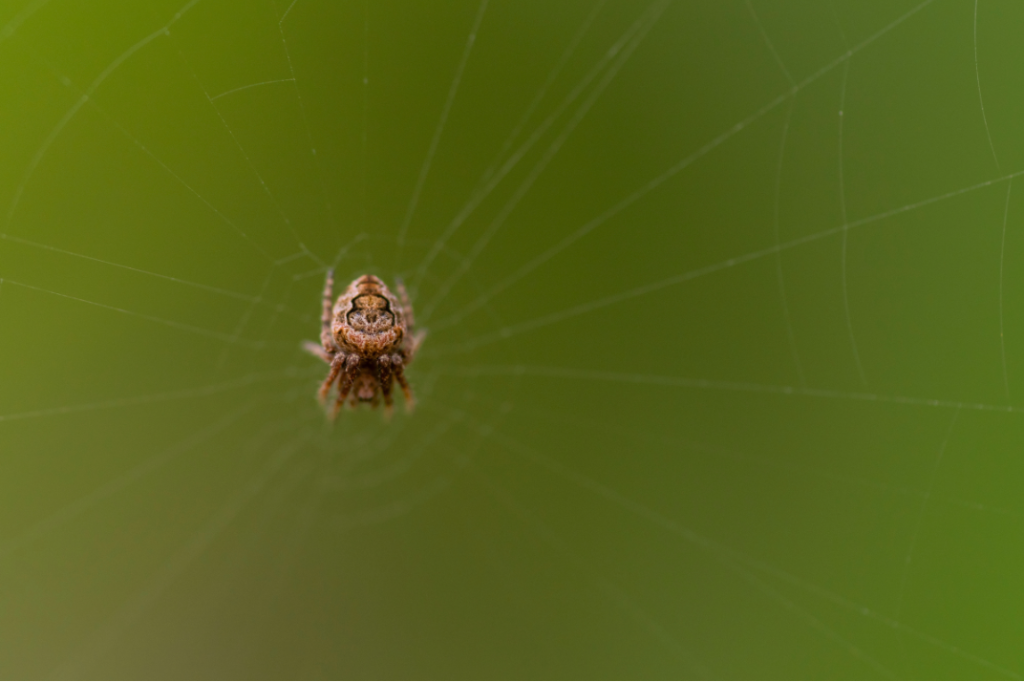
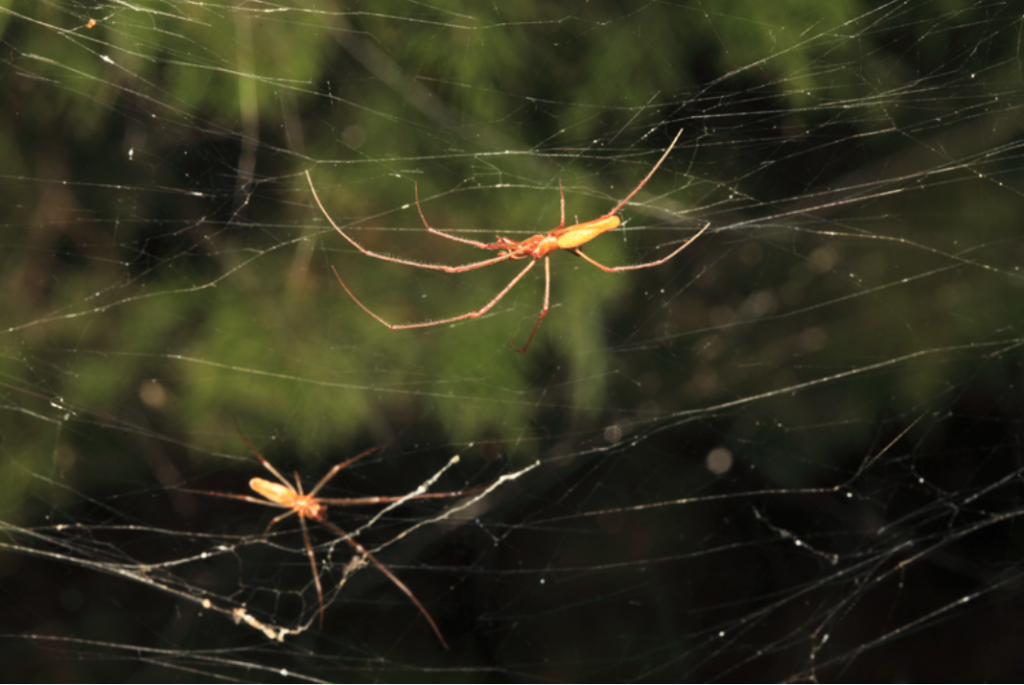
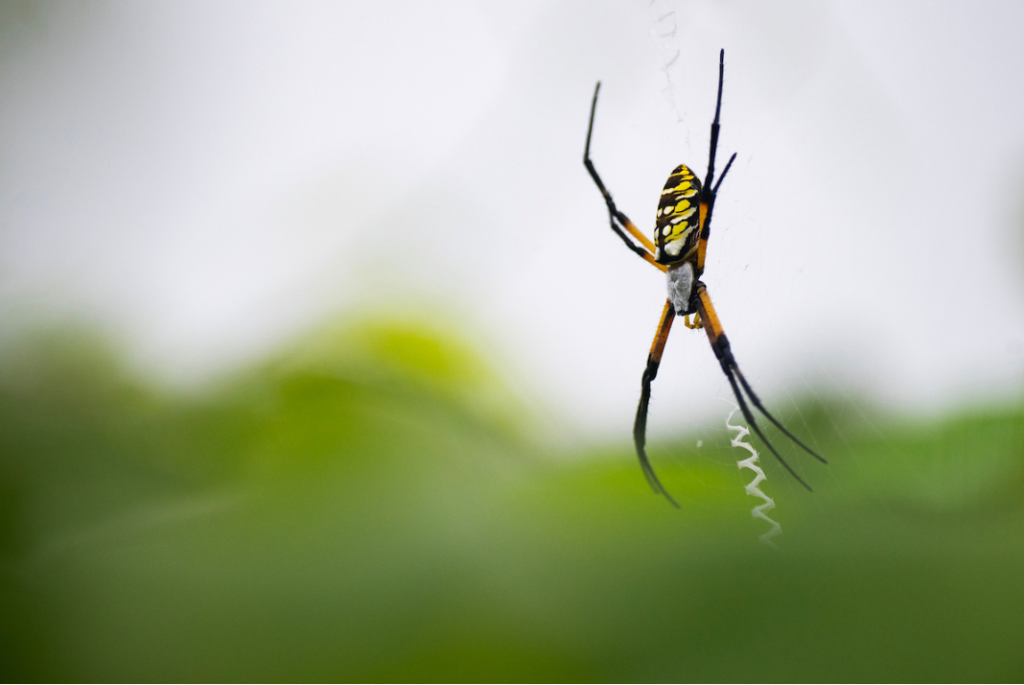
The different types of spider webs serve different purposes, supporting where the spider lives and how it hunts. (Michael Miller, Sam Craft/Texas A&M AgriLife)
Spiral Orb Webs: Nature’s Classic Trap
The flat, spoke-shaped web most people picture is an orb web, the design immortalized by Charlotte, the barn spider in “Charlotte’s Web.” Yellow garden spiders are a common orb weaver found around homes.
Brown said orb weavers often build in insect flight paths, near porch lights, garden edges and doorways to improve their odds of catching prey. They combine several silk types in one web, concentrating the stickiest strands in the center, and typically wait in a corner where they’re easy to overlook. Like other web-building spiders, they feel for vibrations along the silk to know when something has landed.
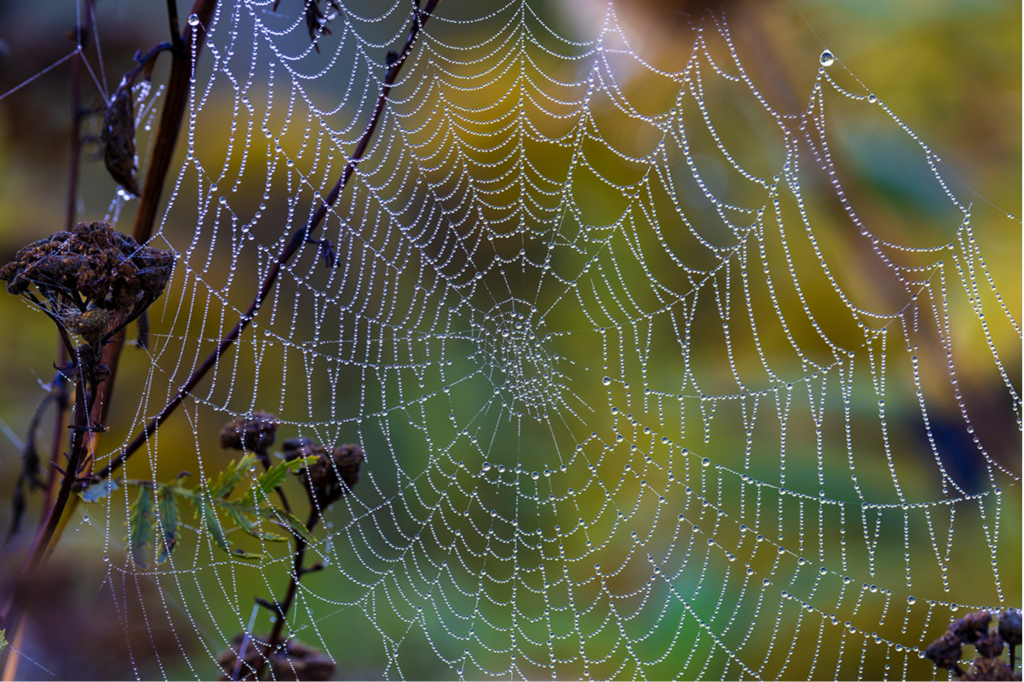
Orb-weaving spiders create a variety of wheel-and-spoke type webs to capture their prey, but they are the quintessential spiderwebs associated with ‘Charlotte’s Web.’ (Michael Miller, Sam Craft/Texas A&M AgriLife)
Tangle webs or cobwebs: the messy one
Texas A&M AgriLife – Texas A&M ForesDepartments
Cobweb spinners include common house spiders and black widows, but Brown said cobwebs in the garage or attic aren’t automatically cause for alarm.
“You’re much more likely to see a common house spider in a cobweb than a black widow,” Brown said.
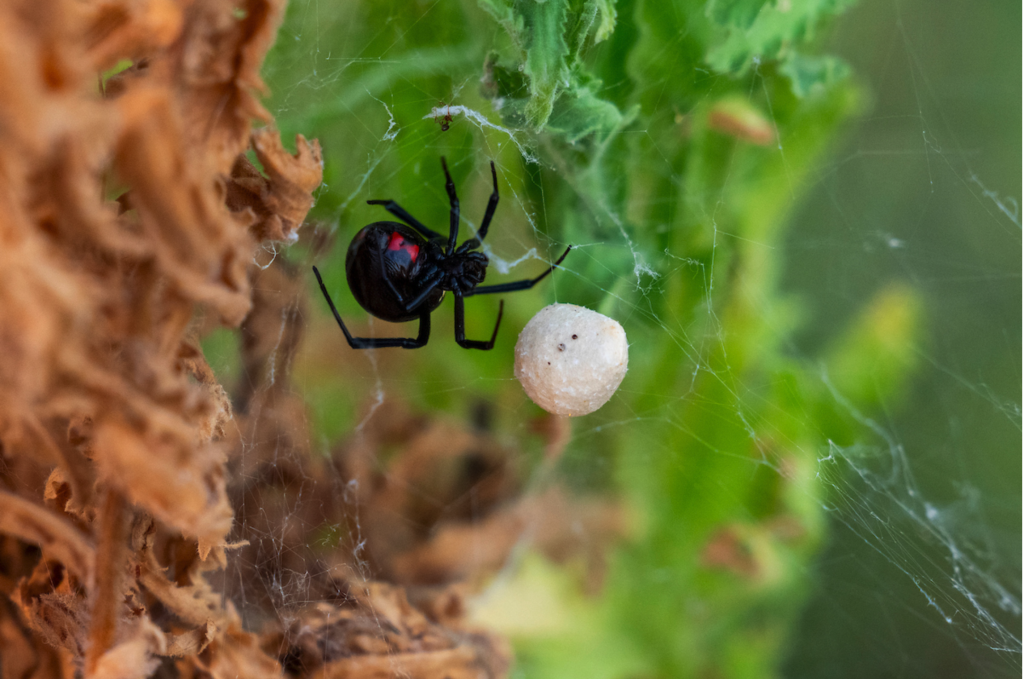
Black widow spiders are known for their venom, but they also create a messy, tangle of webs or cobwebs to capture their prey. (Michael Miller/Texas A&M AgriLife)
Sheet webs: a morning dew masterpiece
Look closely at a lawn on a dewy morning and you may spot sheet webs — tangled, hammock-shaped webs draped across grass and shrubs. The spiders that build them, like American grass spiders, wait underneath for insects to drop in from above. Sheet-web spinners are sometimes mistaken for wolf spiders, which don’t build webs at all.
Funnel webs: not the Aussie kind, but still scary — for bugs
Funnel webs can conjure images of Australia’s highly venomous funnel-web spider, but the funnel weavers common in the U.S. — like barn funnel weavers — are generally harmless to people. They build tunnel-shaped webs low to the ground or around tree bases, with two openings so they always have an escape route.
“They dart out to catch prey that come a little too close,” Brown said.
Net webs: the active hunters
Not all spiders take the wait-and-see approach, Brown said. Net-casting weavers in the ogre-faced spider family spin a small, net-like web and hold it with their front legs to fling over passing prey.
These web weavers are the “Spider-Man” spiders of the bunch, Brown said. They devour prey immediately or wrap it in silk to eat later.
Trapdoor spider burrows: nature’s jack-in-the-box
Trapdoor spiders don’t technically spin webs, but their silk-lined burrows and hinged, camouflaged doors are too clever to leave out. They wait beneath the door, then ambush insects that wander past, using trip lines to sense when prey is near.
Their large, stocky bodies often get them mistaken for tarantulas, but they pose little threat to people beyond a jump scare.
Link to original source with additional Adobe Stock photos is here.